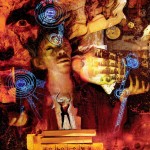
Materials for final assignment

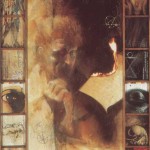
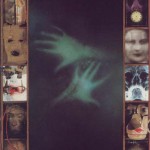
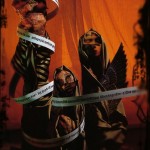
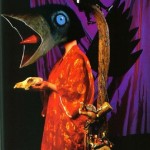
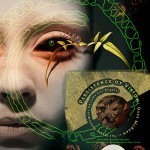
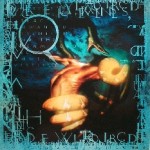
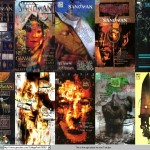
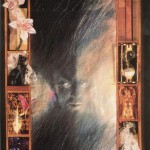
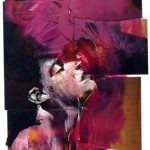
Dave McKean

Some basic tips to get started with Photoshop:

Open Photoshop.  Next, click  file > new > create a name, set the width to 11 inches and the height to 17 inches, set the resolution to 300 pixels/inch > make sure color mode is RGB > press OK

Guides: Before you get started, add new guides to create a border.  Click view > new guide > then create four guides: two vertical guides, one at .5 inches and one at 10.5 inches.  Then create two horizontal guides, one at .5 inches and one at 16.5 inches.  You can create more guides if you want as you work by dragging in from the rulers.  To delete a guide simply drag it out of the workspace. To show or hide guides, click command ;

Cutting and Pasting: Save a collection of JPEGS to the desktop.  To open an image in photoshop, simply drag it onto the blue PS icon.  To cut and paste an image into your workspace, click on the image you want to add and hit  command A to select all and then command C to copy.  Go to your workspace and press command V to paste.  To deselect, press command d.

Layers: When you paste a new image into your workspace, a new layer will automatically be created. If you can’t see the layer window then click window and be sure that layers are selected. As you add images you will see that the layer window can quickly become overly complicated.  Notice at the bottom of the layers window the folder (for organizing layers), the trash can, and the button for adding new layers.  You can organize your arrangements by naming the layers… do this with a control click in the layer window, then select layer properties.

Navigation: To zoom out press command –   to zoom in press command +.  Press command 0 (zero) to fit the image on the screen. To move around in the workspace, hold the spacebar down (notice the little hand) and use the mouse to drag your viewing area to where you want it.

Move: To move your newly pasted image around, click V to select the move tool.  Click and drag the image to where you want it.

Background Color: To change the color of your background, select the background layer.  Next, click on the paintbucket tool.  In the tool palette you can see two swatches of color at the bottom.  Click on the foreground color, select the color you want in the dialogue box.  Finally, with the paintbucket tool, click on the background to apply this color.

Tranformations: To transform an image, in the layer window hold command and click on the layer icon—this will select the contents of the whole layer.  Click edit > transform, and then select scale, rotate, skew, etc. to do what you want to the image.  Once you’re happy with the transform, press enter to apply the change.  To deselect, press command d.

Undo: Of course, at any point you can press command z to undo an action.  If you press command z again it will redo the action.  If you want to undo multiple actions then press alt command z—this will allow you to step backward as far as you’d like.

Trim with the Lasso: To trim away parts of an image, use the lasso tool.  I usually opt for the polygonal lasso for greater control.  Be sure you have the right layer selected, then make multiple clicks to select the area you want to cut away.  You normally need to zoom way in to do this well, so your space bar will be really important for moving around. You’ll need to return to where you started to make an enclosed loop.  After you create your loop, if you decide that you want to include more in your selection then hold the shift key (notice the +) and select the area you want to add.  If you want to select less then hold down the alt or option key (notice the -) and then select what you want to remove from the selection.  When you’re ready press command X to delete the selection.

Saving: Save your file to your netspace.  Programs sometimes crash, so be sure to save often!
“Desiderata”, written by Max Ehrman in 1927

Go placidly amid the noise and haste,

and remember what peace there may be in silence.


As far as possible without surrender

be on good terms with all persons.

Speak your truth quietly and clearly;

and listen to others,

even the dull and the ignorant;

they too have their story.

Avoid loud and aggressive persons,

they are vexatious to the spirit.


If you compare yourself with others,

you may become vain or bitter;

for always there will be greater and lesser persons than yourself.


Enjoy your achievements as well as your plans.

Keep interested in your own career, however humble;

it is a real possession in the changing fortunes of time.

Exercise caution in your business affairs;

for the world is full of trickery.

But let this not blind you to what virtue there is;

many persons strive for high ideals;

and everywhere life is full of heroism.


Be yourself.

Especially, do not feign affection.

Neither be cynical about love;

for in the face of all aridity and disenchantment

it is as perennial as the grass.


Take kindly the counsel of the years,

gracefully surrendering the things of youth.

Nurture strength of spirit to shield you in sudden misfortune.

But do not distress yourself with dark imaginings.

Many fears are born of fatigue and loneliness.


Beyond a wholesome discipline,

be gentle with yourself.

You are a child of the universe,

no less than the trees and the stars;

you have a right to be here.

And whether or not it is clear to you,

no doubt the universe is unfolding as it should.


Therefore be at peace with God,

whatever you conceive Him to be,

and whatever your labors and aspirations,

in the noisy confusion of life keep peace with your soul.


With all its sham, drudgery, and broken dreams,

it is still a beautiful world.

Be cheerful.

Strive to be happy.

Published
Categorized as News

Final Writing Assignment – Art and Narrative Explorations – Due 4/24

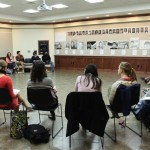
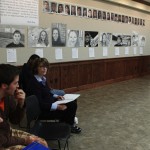
This final writing assignment is a response to our dinner meeting with Sue Ellen Henry’s Multiculturalism in Education class. In 300 words, please address the questions below that interest you the most, and email your written response to the professor in .doc format before the start of class on 4/24.

  • What main ideas did you talk about with the other students at your table?  Did your group arrive at any key conclusions or ideas?
  • What parts of the larger group discussion interested you the most?  Why?
  • Did your artwork communicate in the way that you expected?
  • Did the process of making this drawing or the final discussion influence the way that you think about art (for example: the function of art, the limits or potential of artistic communication, the connections between art making and society)?
  • Did the process of making this drawing or the final discussion affect your ideas about identity, stereotypes, or human interactions in general?
  • Were you surprised by any aspects of the discussion? If so, then please describe your reactions.
  • Through this final interaction with Sue Ellen’s class, did you learn anything about your own preconceptions regarding identity?
  • What else did you learn from this discussion?

Writing Assignment #3 – Art and Narrative Explorations – Due 4/10

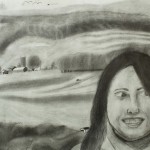
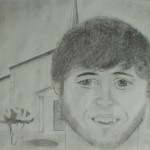
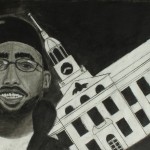
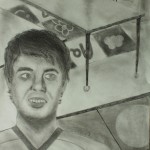
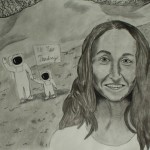
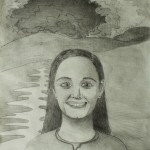
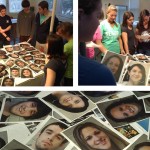
You started out this project by selecting a person’s photo, and based on the person’s appearance you formed an idea of who they might be.  From the stack of available narratives, you chose one that you deemed to be the best fit.  You read the narrative and reflected on it.  You compared and contrasted the narrative you chose with the photo you selected.  You have, at this point, done a great deal of thinking about the details of this person’s life and identity, and this background research will enable you to make a highly meaningful portrait.

Step 1: What location/situation would say the most about this person’s life, identity, and personal history?  In 50 to 100 words, please tell what context you’ll depict your person in.  Explain your reasoning.  Please email this assignment to the professor before the start of class on Tuesday, 4/10.

Step 2: Print out some images of the context that you’ve chosen.

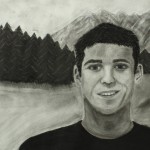
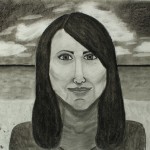
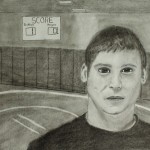
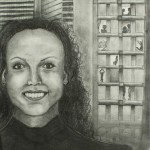
Step 3: Cut out the photo of the person you’re working with and create a collage that puts the person in the context you’ve described above.  Please bring your collage to class on Tuesday, 4/10.  You will begin your large-scale drawing from the collage at the start of this class session.


Writing Assignment 2 – Art and Narrative Explorations

Professor Sue Ellen Henry has put all 25 of her students’ narratives on reserve at the library.  Please stop by sometime before next class to borrow the narratives.  Read through the narratives and choose the one that, in your opinion, best matches the person in the photograph you selected.  Please be sure to maintain the confidentiality of these narratives.  There is considerable risk for the EDUC students in sharing this information, even in its redacted form, with you.  Please honor this trust.

Your response to the following questions should be approximately 300 words in length total, and should be written with the same academic polish as your Artist Report assignments.  You will include your written responses in your Research Binder at the end of the semester, and these assignments will have a significant influence on your binder’s grade.

After selecting a narrative to match your photo, please answer the following questions:

  • Please describe what the process of selecting the narrative was like for you.
  • How did you decide that the narrative you selected was the best fit for the person in the photo?  What were you looking for?  Please tell about your thought process.
  • As you read the narrative, what aspects of the author’s identity stood out to you the most?  Please describe these aspects and tell why they seemed especially significant.
  • Now that you have read and reflected on the narrative, please think back on your first encounter with the photograph. At that time, you formed a set of ideas based on the photo itself, but now the narrative has given you a more complex understanding of the person.  Do you see the photograph differently now?  How?  Why?
  • As you compare your expectations regarding the person in the photo with the narrative that you settled on, how are the two similar?  How are they different?

New: Art Careers Website

This website is a collection of career-building resources for studio art students, covering topics like:

  • Finding art-related internships and employment.
  • The artist’s tools for self promotion: creating websites with WordPress, and using Mailchimp and Facebook for PR.
  • Applying to MFA programs for studio art: considerations to make when selecting schools, instructions for preparing strong applications, and examples of well designed application materials.

http://artcareers.blogs.bucknell.edu/

Published
Categorized as News

The truth about creativity

Jonah Lehrer talks about why brainstorming doesn’t work and why artists need to cultivate grit

Why did Bob Dylan compose the classic “Like a Rolling Stone” only after he had become so disgusted with his own music that he was planning to quit the business permanently? How did Silicon Valley become a hub of innovation while other genius-packed cities did not? And what does the placement of a company’s bathrooms have to do with the number of innovative products it makes?

These questions –- and many more like them — are at the heart of Jonah Lehrer’s new book “Imagine: How Creativity Works.” The journalist and author of “Proust and the Neuroscientist” and “How We Decide” has taken on one of the most deceptive and beguiling problems in the science of mind, what he calls “our most important talent: the ability to imagine what has never existed.” His investigation into how we invent new things, and why some people and communities are more creative than others, takes the reader on a wide-ranging journey through the work of social scientists and neurological researchers — but also into the lives and insights of inventors and engineers, writers and salespeople, musicians and magicians, teachers and students. The result is a bracing, entertaining and counterintuitive guide to an aspect of ourselves that often seems an unsolvable mystery.

Jonah Lehrer spoke with us via email about his new book, and what he’s learned in the making of it.

The Barnes & Noble Review: One of the things that stands out in “Imagine” is how creativity is frequently misperceived, or partly misperceived, as associated with pure freedom of the mind. But in so many cases you highlight the opposite perspective — the one expressed by Milton Glaser’s words as he describes creativity as “a very time-consuming verb”: You highlight the effectiveness of the harsh group critique to enable ideas to grow, or the centrality of “grit” as a building block for a young artist to cultivate.

Jonah Lehrer: There are all sorts of romantic misconceptions about creativity. We’ve long believed, for instance, that the imagination is hindered by constraints and constructive criticism. But the scientific evidence clearly suggests that the opposite is true. We think of creativity as being an innate trait — you either have it or you don’t — when studies have consistently shown that even seemingly minor factors, such as the color of paint on the wall, can dramatically increase creative output. And then there’s the myth of effort. Because creativity has long been associated with the muses, we’ve assumed that creativity should feel easy and effortless, that if we’re truly inventive then the gods will take care of us. But nothing could be further from the truth. Instead, creativity is like any other human talent – it takes an enormous amount of effort to develop. And then, even after we’ve learned to effectively wield the imagination, we still have to invest the time and energy needed to fine-tune our creations. If it feels easy, then you’re doing it wrong.

BNR: The discussion of brainstorming is particularly counterintuitive; you point to research that indicates how “criticism and debate” — despite the former term’s association with repressive negativity — is a more fruitful model for groups working together.  If brainstorming is so unsuccessful a strategy for generating innovation, why has it held on for so long?

JL: I think the allure of brainstorming is inseparable from the fact that it feels good. A group of people are put together in a room and told to free-associate, with no criticism allowed. (The imagination is meek and shy: If it’s worried about being criticized it will clam up.) Before long, the whiteboard is filled with ideas. Everybody has contributed; nobody has been criticized. Alas, the evidence suggests that the overwhelming majority of these free-associations are superficial and that most brainstorming sessions actually inhibit the productivity of the group. We become less than the sum of our parts.

As you note, researchers have shown that group collaborations benefit from debate and dissent; it is the human friction that makes the sparks. Alas, the presence of criticism means that a few people are going to get their feelings hurt. So I think one reason we’ve clung to brainstorming for decades is that it increases employee morale, even if that comes at the cost of creativity. That’s an unfortunate truth, of course, but that doesn’t make it less true. There’s a reason why Steve Jobs always insisted that new ideas required “brutal honesty.”

BNR: Much of your book explores what might be said to be the central paradox of creativity: It seems to require both resolute, disciplined focus and, in Yo-Yo Ma’s phrase, “the abandon of a child.” Is this because when we are talking about the imagination we are really talking about multiple neurological functions? Or is it that creativity is a kind of protean idea itself, that changes with the artist — one might approach everything through “getting in the flow” and another who exists in the world of endless, patient revision?

JL: One of the most dangerous myths of creativity is that it’s a single thing, separate from other kinds of cognition. In reality, however, “creativity” is a catch-all term for a variety of distinct thought processes, each of which is well suited to particular kinds of problems. And this is why different parts of the creative process require different kinds of creative thinking. For instance, a big epiphany relies on a very different set of brain structures than the editing that comes afterward. A pianist in the midst of an improvised solo is thinking very differently from an inventor tweaking a gadget, even though both are in the midst of invention. So whether we should aspire to the abandon of a child or seek out focus depends on the kind of creativity we need at that moment. There is no universal prescription for creative thinking.

This also helps explain why there are as many creative methods as there are creators. Some people smoke joints; others chug coffee. Some go for walks; others stay late at the office. Some need collaborators; others need solitude. Creativity, like most interesting things, resists easy generalizations. I wanted “Imagine” to capture this complexity, not pretend that it doesn’t exist.

BNR: Some of the most thought-provoking insights in “Imagine” describe creative methodologies that seem to aim in one direction, but actually seek to trick (or perhaps hack) the brain’s programming. For example, you describe how students of improvisation at Second City spend a brief session before each class sharing maximally intimate confessions from their lives. The point for the actors isn’t, as it might appear, to get in touch with deep emotions. Rather, it’s to simply shut off the censoring part of the brain, so that in the work that follows, ideas and associations emerge freely. Should more of us be employing these sorts of strategies?

JL: Creativity is so hard that I think we need all the help we can get. Some of the mind hacks I describe in “Imagine” come from watching the time-tested habits of successful creators, such as those comics at Second City. And other hacks come from science, from the controlled conditions of the lab. Did you know, for instance, that people solve 30 percent more insight puzzles when they’re slightly drunk? That’s my kind of empiricism.

BNR: So much of your previous book “How We Decide” described ways in which we have difficulty understanding how our brains are actually working — the “emotional brain” secretly working away inside, with our assumptions about the supremacy of the “rational brain” leading us into constant miscalculation.  ”Imagine” has a similar focus on the mysteries of thought, but, perhaps in keeping with the title, the emphasis seems to be more on collaborating with the unknown parts of the self.  Did you see it that way? Are your books on a continuum in your own mind?

JL: I think both books revel in the fact that so much of our wisdom — whether it’s those inexplicable hunches that lead to good decisions, or that moment of insight that comes in the shower — emerge from mental places we have no access to. This is strange, no? The mind remains a black box, even when it’s our own mind!

And this is where modern science comes in handy. All these fancy experimental tools help us peer below the surface of consciousness, illuminating those darkened corners that we’re not even aware of. As a result, we’re able to understand ourselves in a new way and hopefully squeeze a few more epiphanies from those three pounds of Jell-O inside the skull.

BNR: Although your book is largely not a prescriptive one, an idea that your last three chapters all strongly support seems to be designing ways for more “creative collisions” to occur in schools, at work and in everyday life. Over the last several years, the focus in many aspects of our culture has been on building a digital “social network.” Can this do the work of physical and conversational interaction? Do we need to spend more resources, as a culture, encouraging the power of the “emergent property of people coming together”?

JL: In the late 1990s, when the dot-com fever was at its peak, many technology enthusiasts predicted that cities and physical offices would soon become obsolete, a relic of the analog age. After all, in an online world of email and video chats, why should we sacrifice our quality of life to live amid strangers? Cheap bandwidth would mean the end of expensive rents: The zeroes and ones hurtling across the fiber optic cables would supply us with all of our human interactions.

Of course, this pessimism has not come to pass. More people than ever before are moving to cities; we still commute to skyscrapers. (One of my favorite factoids is that attendance at business conferences has doubled since the invention of Skype.) And I think the reason Skype has not killed off cities and offices is because something magical happens when we cram ourselves together. It turns out that all those random interactions add up, which is why the most innovative cities and workspaces have a way of hurling people together, forcing them to converse and share knowledge.

I’m reminded here of that great Steve Jobs story about the Pixar headquarters. When he was planning the studio in the late 1990s, he had the building arranged around a central atrium, so that the diverse staff of artists, writers and computer scientists would run into each other. But Jobs soon realized that it wasn’t enough to create an airy atrium; he needed to force people to go there. He began with the mailboxes, which he shifted to the lobby. Then he moved the meeting rooms to the center of the building, followed by the cafeteria, the coffee bar and the gift shop. Finally, he decided that the atrium should contain the only set of bathrooms in the entire building. (He was later forced to compromise and install a second pair of bathrooms.) At first, people hated this design, since it meant they were constantly schlepping to the atrium. But now lots of people have their bathroom breakthrough story, describing how some errant conversation while washing their hands led to an insight.

BNR: Has working on this topic changed the way you think, your approach to “creative” tasks? Do you work differently than you did before you started this book?

JL: It definitely has. I think the single biggest change is how I respond to a creative block. Before, when I was stuck on a piece of writing — and I’m often stuck — I’d chain myself to my desk. I’d drink strong coffee and will myself to focus until I found the answer. I assumed that the answer would only arrive if I searched for it relentlessly.

Of course, I’d often wake up the next day and realize that my “answer” was often an illusion, that I’d stayed up late to get a fix that didn’t really fix anything. And so I’d be forced to begin again.

And here’s where the science comes in handy. Now, when I’m really stuck, I think about all that research on moments of insight, which suggests that insights are far more likely to arrive when we’re relaxed, and better able to eavesdrop on the murmurs of the unconscious. Instead of staying at my desk, I go for a long walk. Einstein once declared that “creativity is the residue of time wasted.” So I guess you could say I’ve gotten much better at wasting time.

Published
Categorized as News

Art and Narrative Explorations – Writing Assignment #1

It’s been said that “you can’t judge a book by its cover”, but everyday, even thoughtful people make assumptions about who others are based on outer appearances.  Clearly, since preconceptions are often inaccurate and divisive, they can negatively interfere with our relationships with others.  This project is meant to be a self-reflective investigation of these preconceptions.

Now that you have chosen a photograph, please answer the following questions in 200 to 300 words:

What was compelling about this photograph to you? Why do you think you selected it?

Who does the person in this photo remind you of?  Why?

Where do you think the person is from?  Why?  What visual clues lead you to this conclusion?

What do you think this person’s experience was like growing up?  What challenges and opportunities do you think they may have faced?

What do you think is important to this person?

Instructions for posting artsXpose materials on the class website

Follow these steps to post artsXpose materials on the class website:

  1. Navigate to the class website at drawing.blogs.bucknell.edu 
  2. Create a new post by clicking at the top of the page on the “+ New Post” button.
  3. You want your post to show up on the artsxpose page. To make this happen you need to put the post in the artsxpose category.  Click on “Document” (in the column on the right side of the screen), then click on “categories”, and then check the box next to “artsxpose”.
  4. Upload a photo by clicking on the “add image” icon below the text field.
  5. * So that Professor Meiser can give you credit for your work, please remember to put your name in the title of the post *
  6. When you’re finished adding content, click the blue “publish” button on the right.
  7. A message will appear at the top of the page that says “Post published. View post”… Now, if you click on “view post” it will show you what the post looks like on the site… at this point, if you want to make any changes, just click on the “edit post” button and you will return to the prior screen.  If you make any edits, be sure to click the blue “update” button on the right to save the changes.

Click here to see an example of how to post using the FORM option

Click here to see an example of how to post using the PHOTO option

Published
Categorized as artsXpose

I am for an art … by Claes Oldenburg

I am for an art that is political-erotical-mystical, that does something other than sit on its ass in a museum.

I am for an art that grows up not knowing it is art at all, an art given the chance of having a staring point of zero.

I am for an art that embroils itself with the everyday crap & still comes out on top.

I am for an art that imitates the human, that is comic, if necessary, or violent, or whatever is necessary.

I am for an art that takes its form from the lines of life itself, that twists and extends and accumulates and spits and drips, and is heavy and coarse and blunt and sweet and stupid as life itself.

I am for an artist who vanishes, turning up in a white cap painting signs or hallways.

I am for an art that comes out of a chimney like black hair and scatters in the sky.

I am for an art that spills out of an old man’s purse when he is bounced off a passing fender

I am for the art out of a doggy’s mouth, falling five stories from the roof.

I am for the art that a kid licks, after peeling away the wrapper.

I am for an art that joggles like everyones knees, when the bus traverses an excavation.

I am for art that is smoked, like a cigarette, smells, like a pair of shoes.

I am for art that flaps like a flag or helps blow noses, like a handkerchief.

I am for art that is put on and taken off, like pants, which develops holes, like socks, which is eaten, like a piece of pie, or abandoned with great contempt, like a piece of shit.

I am for art covered with bandages, I am for art that limps and rolls and runs and jumps. I am for art comes in a can or washes up on the shore.

I am for art that coils and grunts like a wrestler. I am for art that sheds hair.

I am for art you can sit on. I am for art you can pick your nose with or stub your toes on.

I am for art from a pocket, from deep channels of the ear, from the edge of a knife, from the corners of the mouth, stuck in the eye or worn on the wrist.

I am for art under the skirts, and the art of pinching cockroaches.

I am for the art of conversation between the sidewalk and a blind mans metal stick.

I am for the art that grows in a pot, that comes down out of the skies at night, like lightning, that hides in the clouds and growls. I am for art that is flipped on and off with a switch.

I am for art that unfolds like a map, that you can squeeze, like your sweetys arm, or kiss, like a pet dog. Which expands and squeaks, like an accordion, which you can spill your dinner on, like an old tablecloth.

I am for an art that you can hammer with, stitch with, sew with, paste with, file with.

I am for an art that tells you the time of day, or where such and such a street is.

I am for an art that helps old ladies across the street.

I am for the art of the washing machine. I am for the art of a government check. I am for the art of last wars raincoat.

I am for the art that comes up in fogs from sewer-holes in winter. I am for the art that splits when you step on a frozen puddle. I am for the worms art inside the apple. I am for the art of sweat that develops between crossed legs.

I am for the art of neck-hair and caked tea-cups, for the art between the tines of restaurant forks, for odor of boiling dishwater.

I am for the art of sailing on Sunday, and the art of red and white gasoline pumps.

I am for the art of bright blue factory columns and blinking biscuit signs.

I am for the art of cheap plaster and enamel. I am for the art of worn marble and smashed slate. I am for the art of rolling cobblestones and sliding sand. I am for the art of slag and black coal. I am for the art of dead birds.

I am for the art of scratchings in the asphalt, daubing at the walls. I am for the art of bending and kicking metal and breaking glass, and pulling at things to make them fall down.

I am for the art of punching and skinned knees and sat-on bananas. I am for the art of kids’ smells. I am for the art of mama-babble.

I am for the art of bar-babble, tooth-picking, beerdrinking, egg-salting, in-sulting. I am for the art of falling off a bartstool.

I am for the art of underwear and the art of taxicabs. I am for the art of ice-cream cones dropped on concrete. I am for the majestic art of dog-turds, rising like cathedrals.

I am for the blinking arts, lighting up the night. I am for art falling, splashing, wiggling, jumping, going on and off.

I am for the art of fat truck-tires and black eyes.

I am for Kool-art, 7-UP art, Pepsi-art, Sunshine art, 39 cents art, 15 cents art, Vatronol Art, Dro-bomb art, Vam art, Menthol art, L & M art Ex-lax art, Venida art, Heaven Hill art, Pamryl art, San-o-med art, Rx art, 9.99 art, Now art, New ar, How art, Fire sale art, Last Chance art, Only art, Diamond art, Tomorrow art, Franks art, Ducks art, Meat-o-rama art.

I am for the art of bread wet by rain. I am for the rat’s dance between floors. I am for the art of flies walking on a slick pear in the electric light. I am for the art of soggy onions and firm green shoots. I am for the art of clicking among the nuts when the roaches come and go. I am for the brown sad art of rotting apples.

I am for the art of meowls and clatter of cats and for the art of their dumb electric eyes.

I am for the white art of refigerators and their muscular openings and closing.

I am for the art of rust and mold. I am for the art of hearts, funeral hearts or sweetheart hearts, full of nougat. I am for the art of worn meathooks and singing barrels of red, white, blue and yellow meat.

I am for the art of things lost or thrown away, coming home from school. I am for the art of cock-and-ball trees and flying cows and the noise of rectangles and squares. I am for for the art of crayons and weak grey pencil-lead, and grainy wash and sticky oil paint, and the art of windshield wipers and the art of the finger on a cold window, on dusty steel or in the bubbles on the sides of a bathtub.

I am for the art of teddy-bears and guns and decapitated rabbits, explodes umbrellas, raped beds, chairs with their brown bones broken, burning trees, firecracker ends, chicken bones, pigeon bones, and boxes with men sleeping in them

I am for the art of slightly rotten funeral flowers, hung bloody rabbits and wrinkly yellow chickens, bass drums & tambourines, and plastic phonographs.

I am for the art of abandoned boxes, tied like pharohs. I am for an art of watertanks and speeding clouds and flapping shades

I am for U.S. Government Inspected Art, Grade A art, Regular Price art, Yellow Ripe art, Extra Fancy art, Ready-to-eat art, Best-for-less art, Ready-to-cook art, Fully cleaned art, Spend Less art, Eat Better art, Ham art, Pork art, chicken art, tomato art, bana art, apple art, turkey art, cake art, cookie art.


add:

I am for an art that is combed down, that is hung from each ear, that is laid on the lips and under the eyes, that is shaved from the legs, that is burshed on the teeth, that is fixed on the thighs, that is slipped on the foot.

square which becomes blobby


May 1961

Published
Categorized as News

Aaron Meyers artXpose #2 (example)

Example of how to submit artsXpose with the PHOTO option

For each artsXpose you complete, you may submit either a form OR a photo–it is not necessary to submit both.  Included below is an example of how you may submit artsXpose using the PHOTO option.  For the sake of efficiency, you may want to cut-and-paste the text below directly into your post and then appropriately revise the information.  

Your photograph should depict you at the event with some distinctive features.  This will make it obvious that you attended.

– – –

Title of Event: Joe Meiser Artist Lecture
Date & Time of Event: Friday February 3rd 7 pm
Location of Event: Samek Art Gallery
Type of event: Artist lecture and reception

Josh, Allan, and Reyes-
Published
Categorized as artsXpose

Aaron Meyers ArtsXpose #1 (example)

Example of how to submit artsXpose with the FORM option

For each artsXpose you complete, you may submit either a form OR a photo–it is not necessary to submit both.  Included below is an example of how you may submit artsXpose using the FORM option.  For the sake of efficiency, you may want to cut-and-paste the text below directly into your post and then appropriately revise the information.

– – –


Title of Event: Bill T. Jones Lecture

Date and time of event: Monday January 30th 7:30 pm

Location of Event: Harvey Powers Theater

Type of Event: Guest Artist Lecture

1.) Provide a brief detail-oriented technical description or summary of the event you attended. (This section should remain journalistic and should not be reflective of your opinion.)

Bill T. Jones gave an hour lecture with almost a full half hour of questioning. During the lecture he spoke from memory and showed a 15 minutes video of one of his dances being performed by different dancers. He also showed brief examples of his movement throughout the lecture.

2.) Use the section below to write a well-structured paragraph focusing on your personal criticalinsight / response to the event. How did you interpret or react to what was presented to you?

It was clear that Jones was a stage performer. Even in a lecture he had an amazing presence and was very confident. I enjoyed seeing him show bits of his dance moves. He also told a lot of very interesting stories about both his dad and his long time partner. One thing that I found interesting was at the beginning of the lecture he talked a lot about being a part of a counter culture and pushing against society. He described how fruitful it was for him to live in an artist colony that had no concern for material success. However at the end of the lecture he was described some of his current financial realities and the trouble of maintaining a dance company.

3.) What information, ideas, images, etc. most impressed you and why?

I was most impressed by his presence, story telling, and his brief dance moves. They were all very clear but also very unique.

4.) Overall, how would you rate this event (10 being the most worthwhile)?
(10 / 9 / 8 / 7 / 6 / 5 / 4 / 3 / 2 / 1 )

eight
5.) Justify your rating in the question above:

I think for he was a really articulate speaker and was also entertaining. He also gave me two really valuable messages: don’t let yourself get in the way of the work, and why does it have to be anyone in particulars body?


Published
Categorized as artsXpose

New York City Bus Trip!!! – Saturday – March 3, 2012

The Department of Art & Art History is taking a bus trip to New York City and students are strongly encouraged to attend this trip as it will be a great opportunity to observe cutting edge contemporary artwork.  Attending this trip will count as two artsXpose assignments, and students in attendance will not be required to submit any documentation.  Talk with Joe if you’d like to attend.

$30 BU ID, cash or check payable to Bucknell University

  • The bus leaves Bucknell at 7:00 a.m. – 7th Street Parking Lot (Across from Smith Hall).
  • One-way trips are not encouraged, but if you are NOT planning to return on the bus please notify the Art History faculty in charge before getting off the bus in New York City.
  • The bus will drop passengers off at the Metropolitan Museum, 5th Avenue at 82nd Street.  Upon arrival at Metropolitan Museum, enter the ground level 81st Street entrance.  Use their coat check and ticket desk to avoid the crowds at main entrance.  No suitcases are allowed in the museum.
  • The second bus stop is the Chelsea Art Gallery at 9th Avenue and 24th Street.
  • The bus will depart from New York City at 7:00 p.m. at 6th Avenue between 54th and 55th Streets – east side of the street (one block north of Hilton Hotel). Passengers should plan on arriving at the re-boarding location at least 15 minutes early
  • Bucknell University and the Department of Art and Art History are not responsible for passengers left in the city. If a passenger misses the bus because s/he was not on time for the departure or at the wrong pick-up location, s/he is responsible for finding alternative means of transportation to Bucknell.
  • If you miss the bus for departure, contact the Bucknell Switchboard at 570-577-2000 to let them know how you plan on getting back to Lewisburg.
  • No refunds will be given after noon on Monday, February 27, 2012.

NOTE: Alcohol and tobacco product use is prohibited on the bus.

Bus Company Name: Susquehanna Trailways___Bus No.____________

           Phone number 800-692-6314 from 6:00 AM – 4:00 PM

Published
Categorized as News

HOW TO WRITE GOOD

Caveat emptor.
Carpe diem.
O si villi, si ergo, fortibus es in ero.
Et tu, brute.

by Frank L. Visco

My several years in the word game have learnt me several rules:

  1. Avoid alliteration. Always.
  2. Prepositions are not words to end sentences with.
  3. Avoid cliches like the plague. (They’re old hat.)
  4. Employ the vernacular.
  5. Eschew ampersands & abbreviations, etc.
  6. Parenthetical remarks (however relevant) are unnecessary.
  7. It is wrong to ever split an infinitive.
  8. Contractions aren’t necessary.
  9. Foreign words and phrases are not apropos.
  10. One should never generalize.
  11. Eliminate quotations. As Ralph Waldo Emerson once said: “I hate quotations. Tell me what you know.”
  12. Comparisons are as bad as cliches.
  13. Don’t be redundant; don’t use more words than necessary; it’s highly superfluous.
  14. Profanity sucks.
  15. Be more or less specific.
  16. Understatement is always best.
  17. Exaggeration is a billion times worse than understatement.
  18. One-word sentences? Eliminate.
  19. Analogies in writing are like feathers on a snake.
  20. The passive voice is to be avoided.
  21. Go around the barn at high noon to avoid colloquialisms.
  22. Even if a mixed metaphor sings, it should be derailed.
  23. Who needs rhetorical questions?


Published
Categorized as News