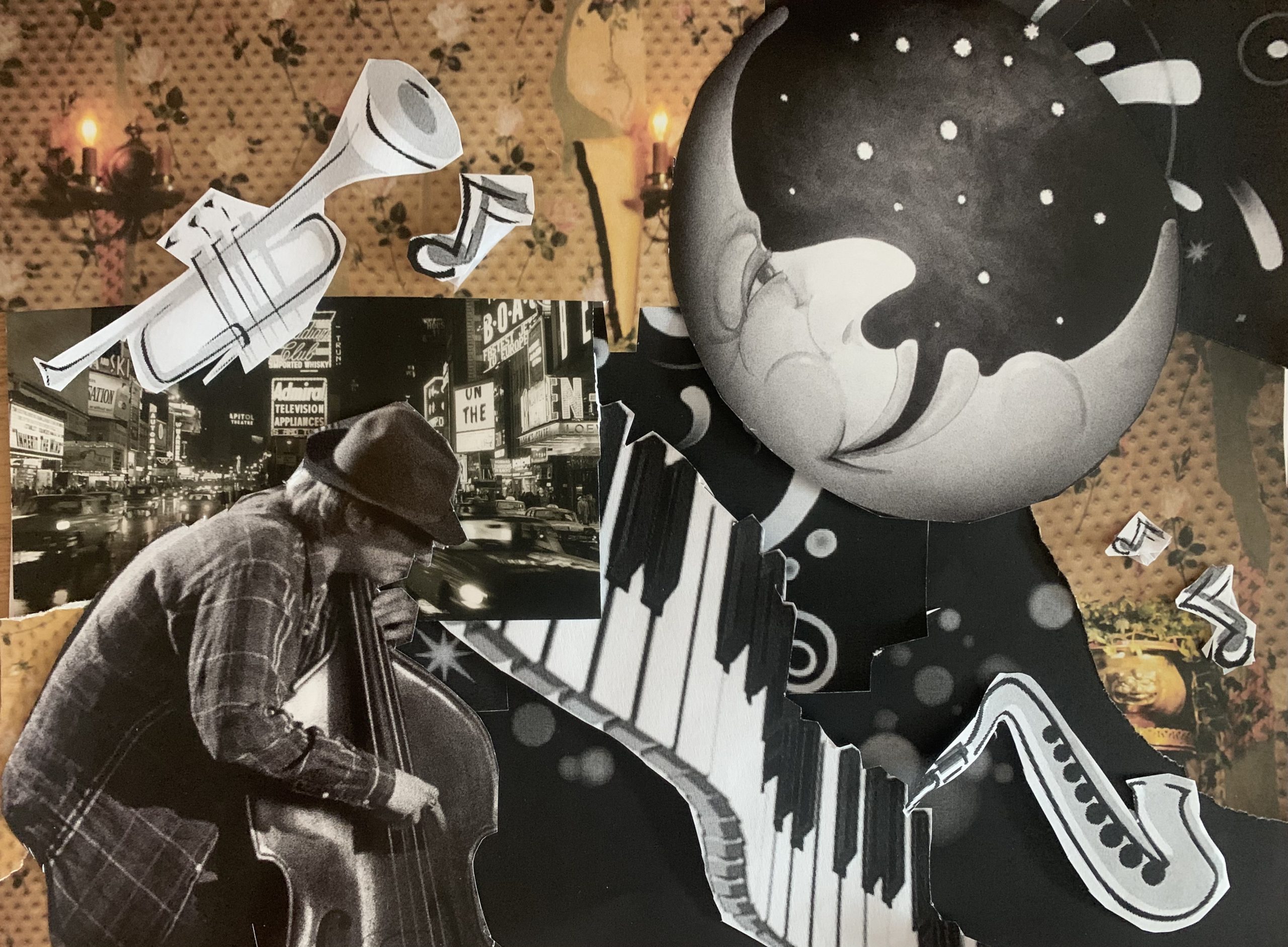
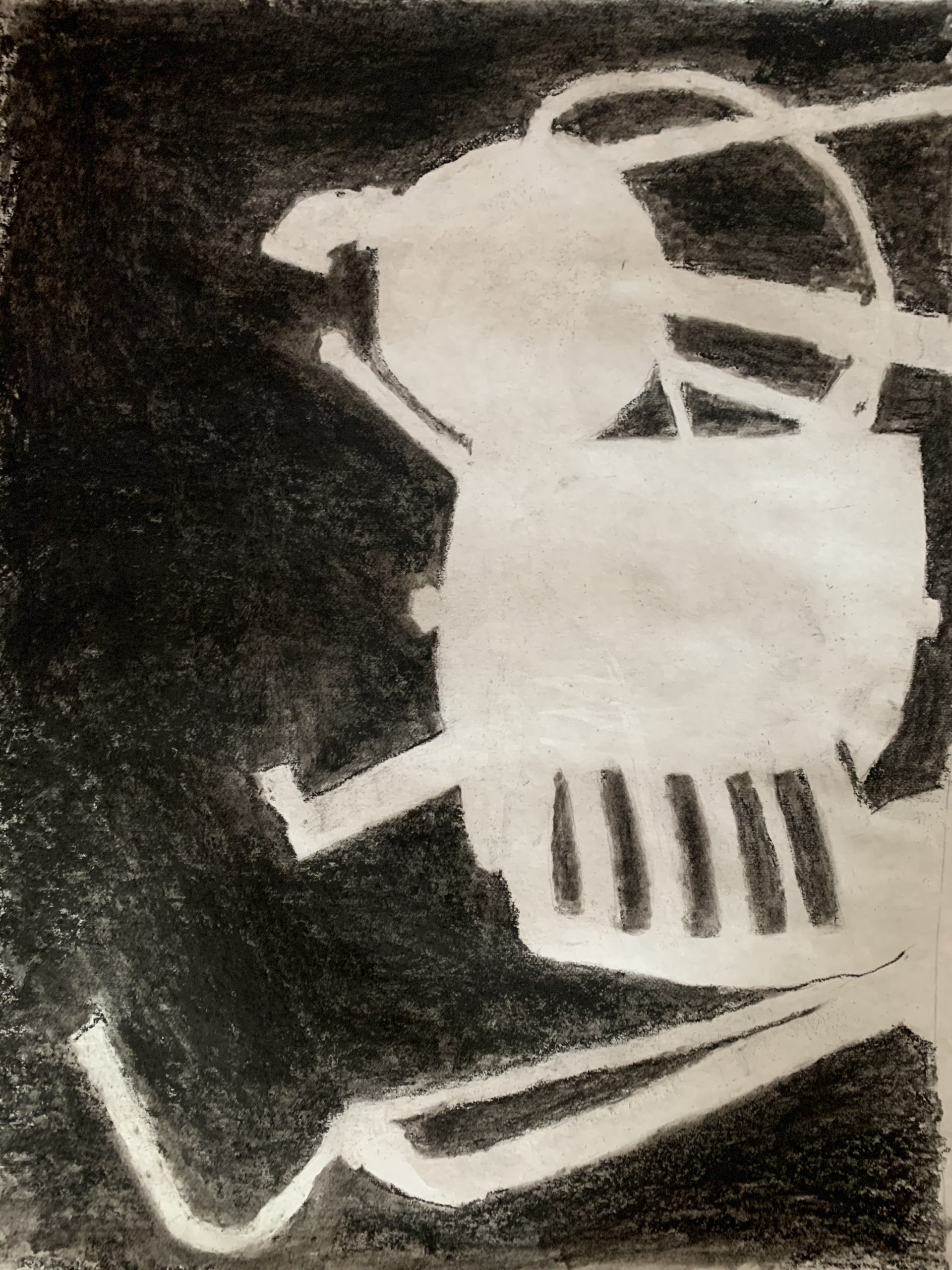
Connor Wackerman, Collage (Moon Jazz)
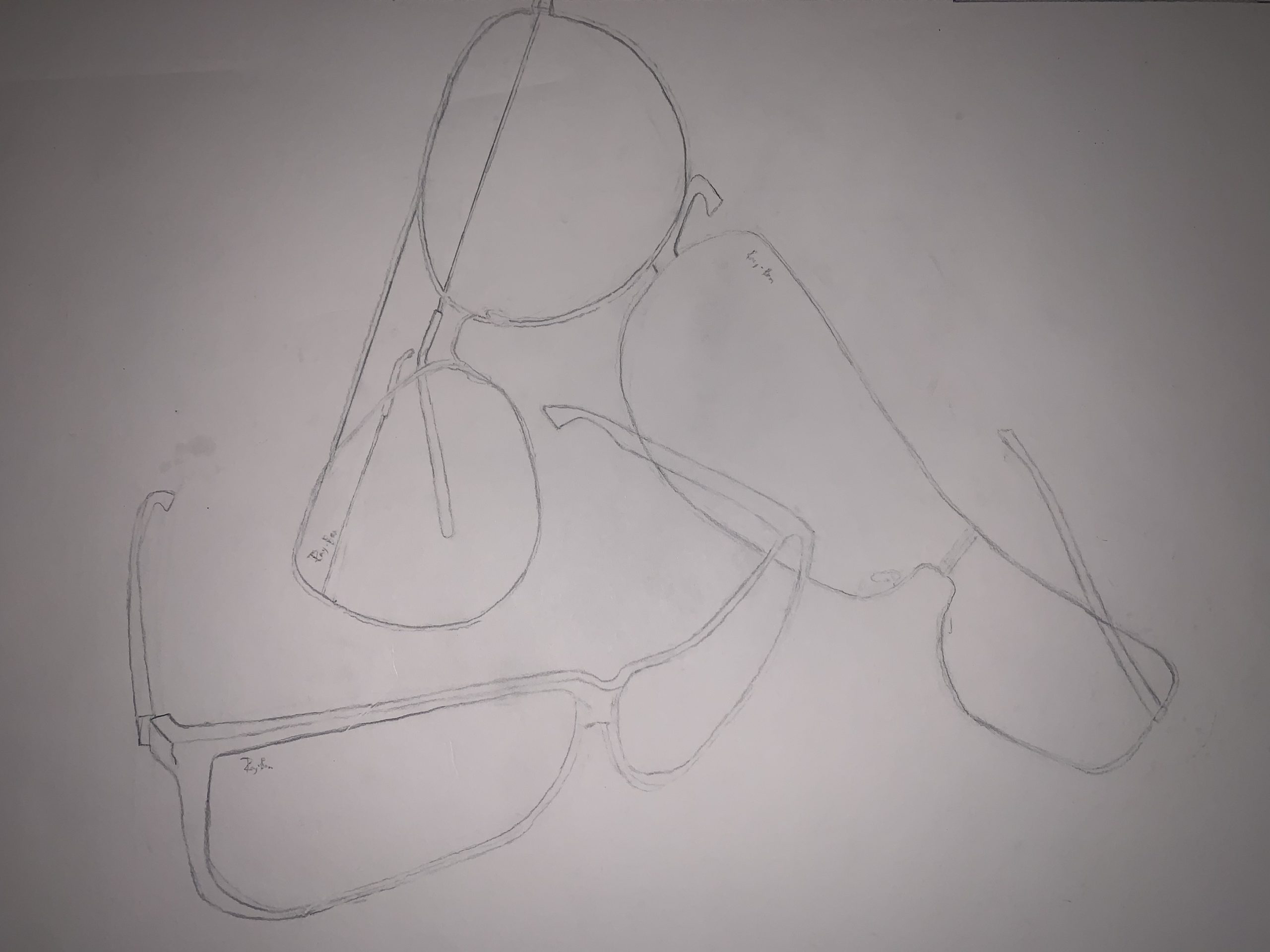
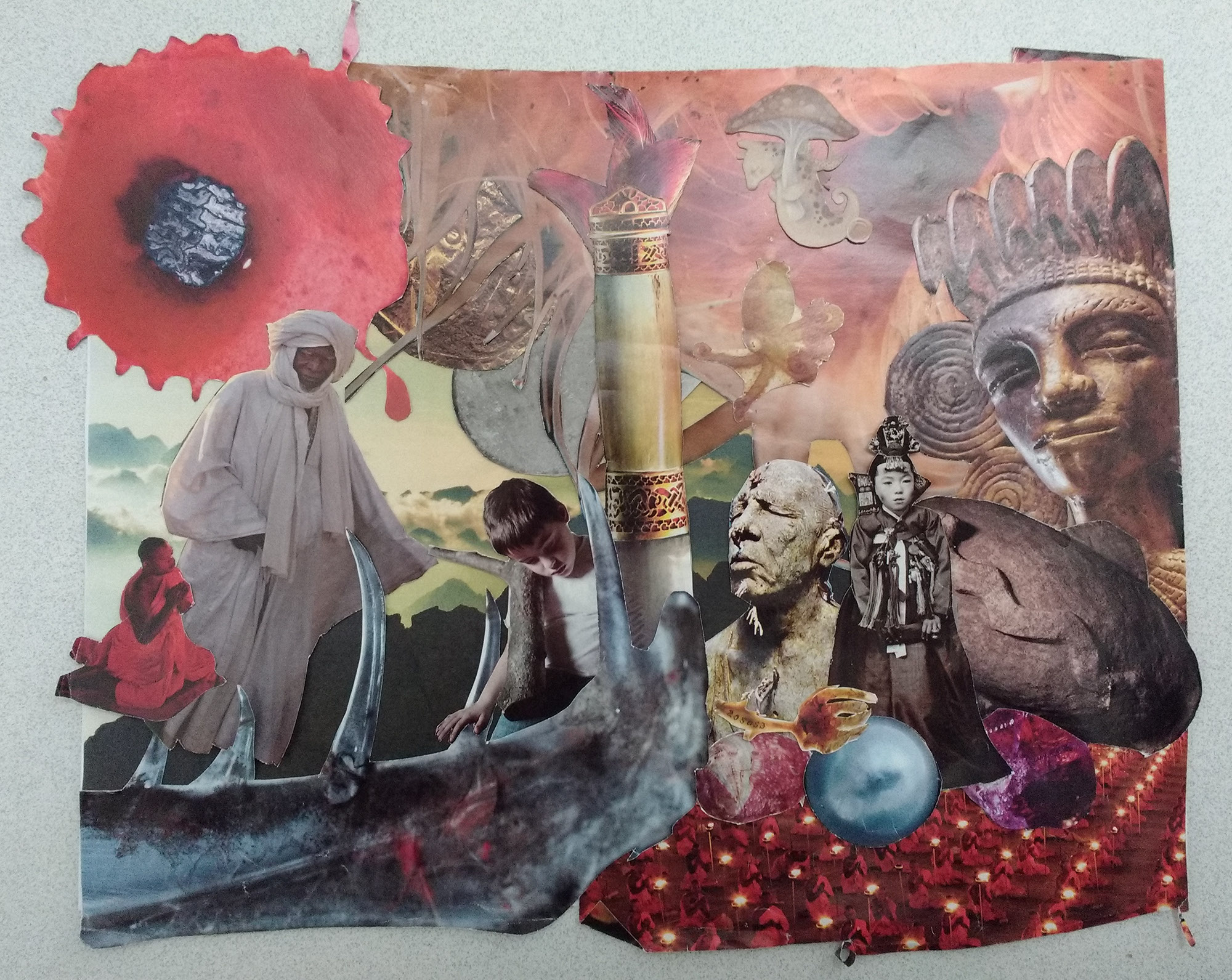
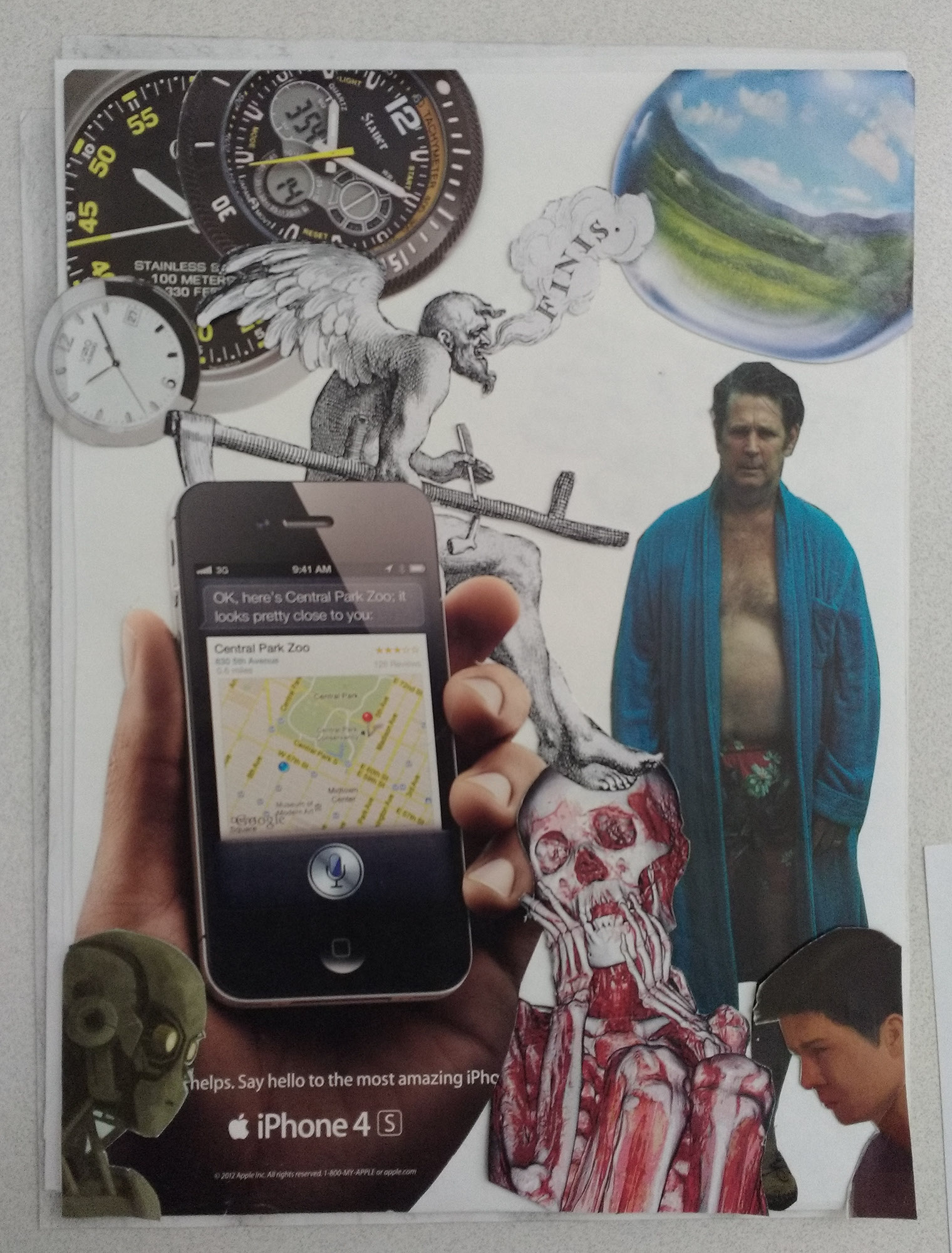
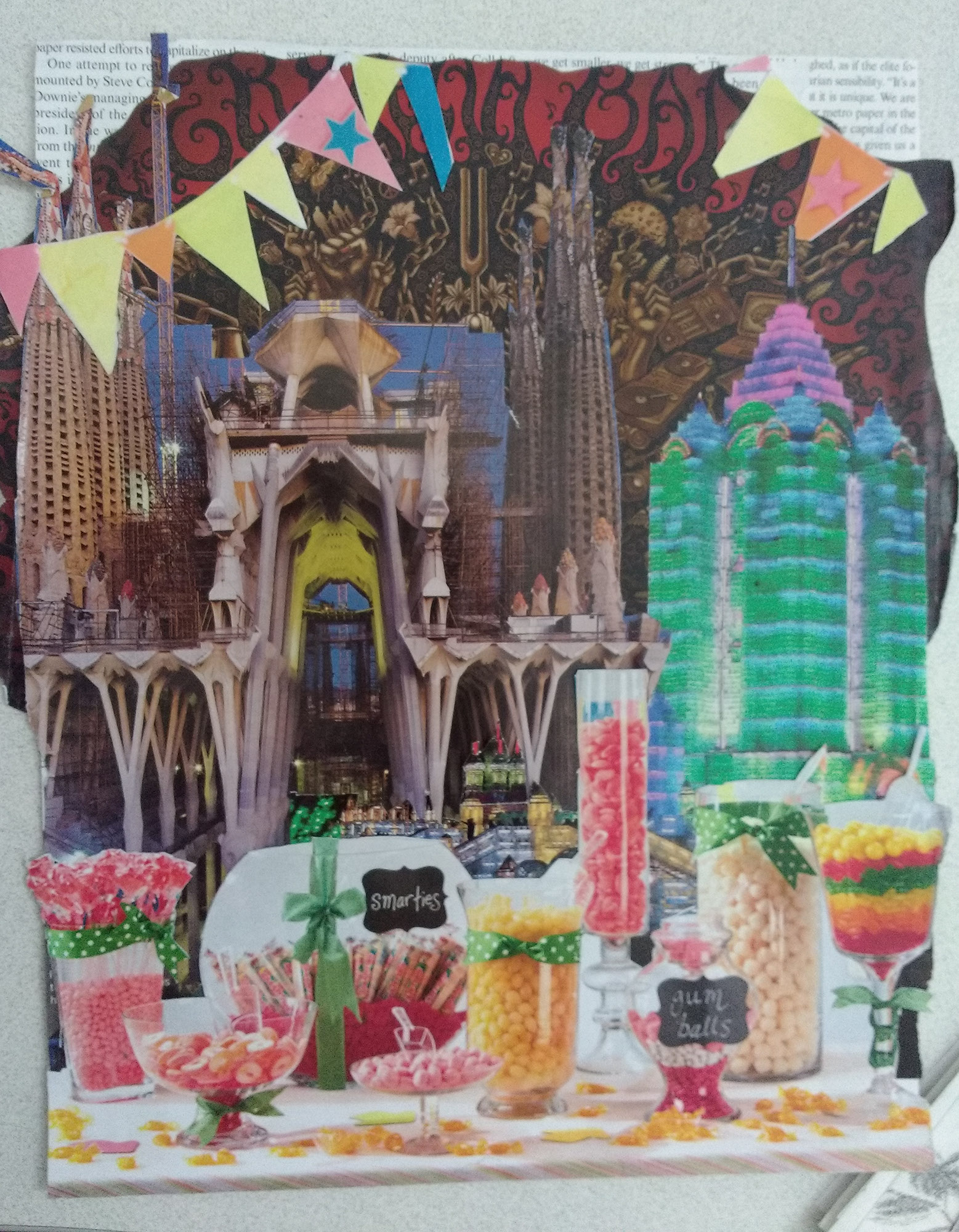
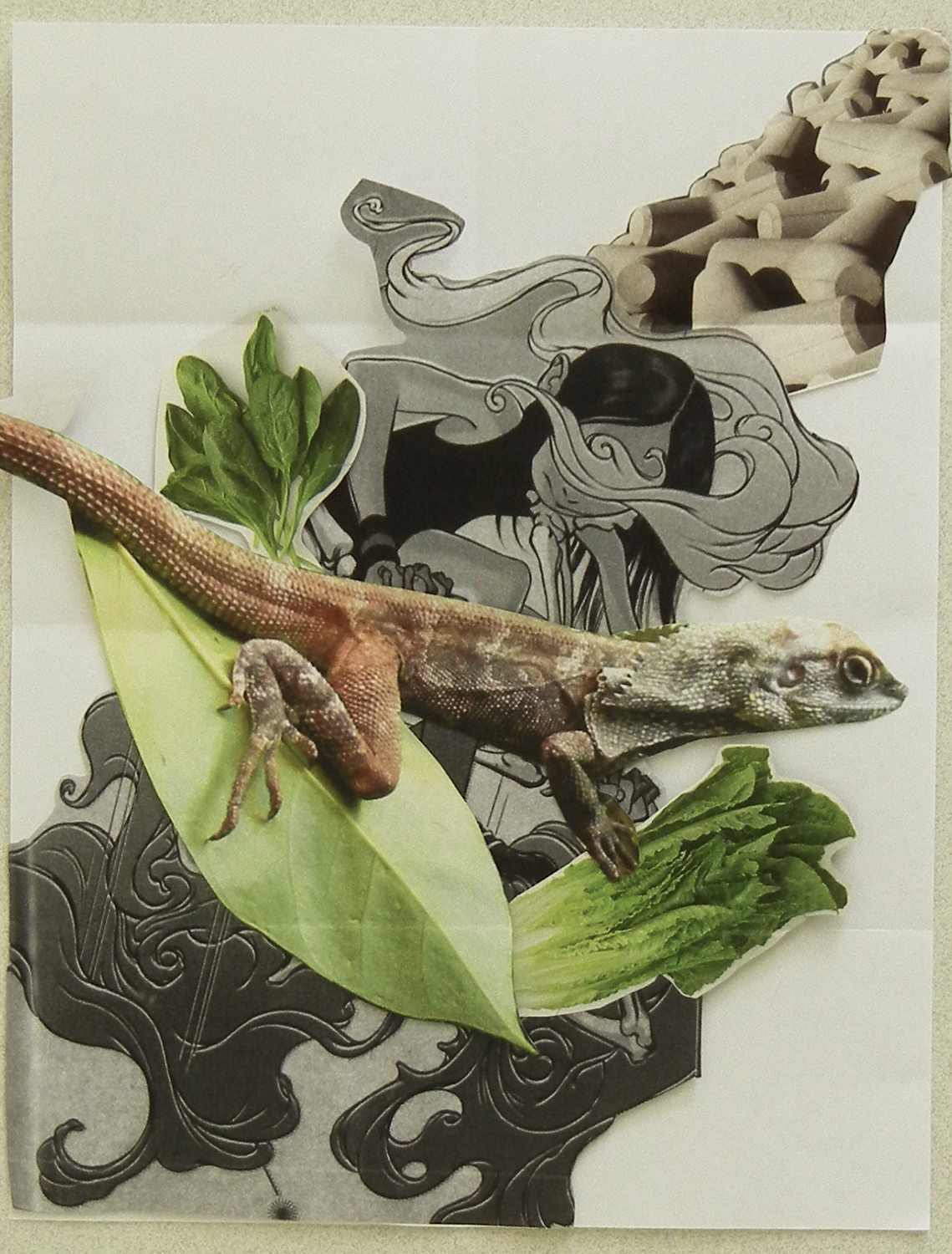
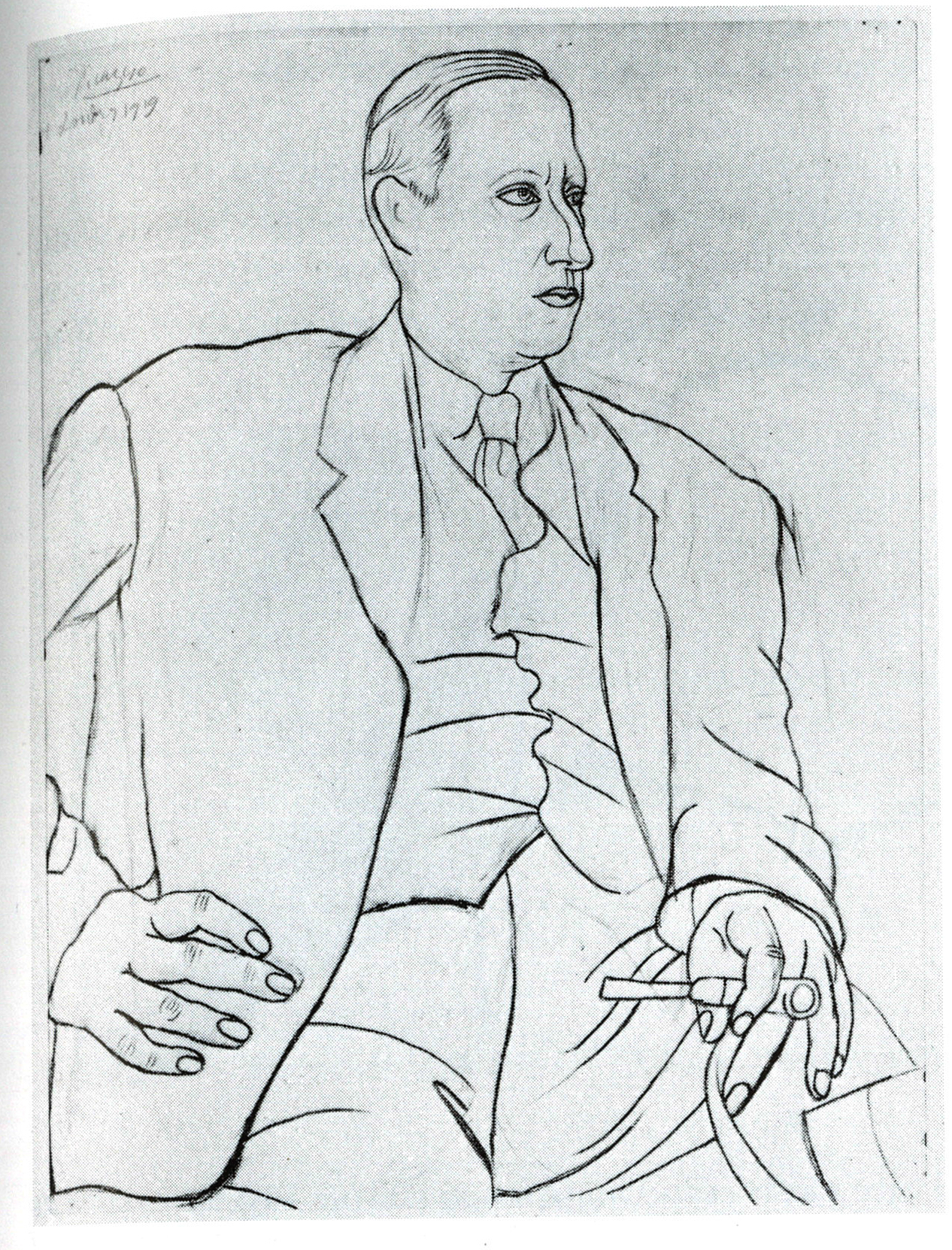
These collages are effective because they make good use of the principles of design and composition strategies we’ve been discussing in class, such as: unity and variety, contrast, emphasis, balance, repetition, cropping, off-centering, the rule of thirds, the diagonal, and the X.
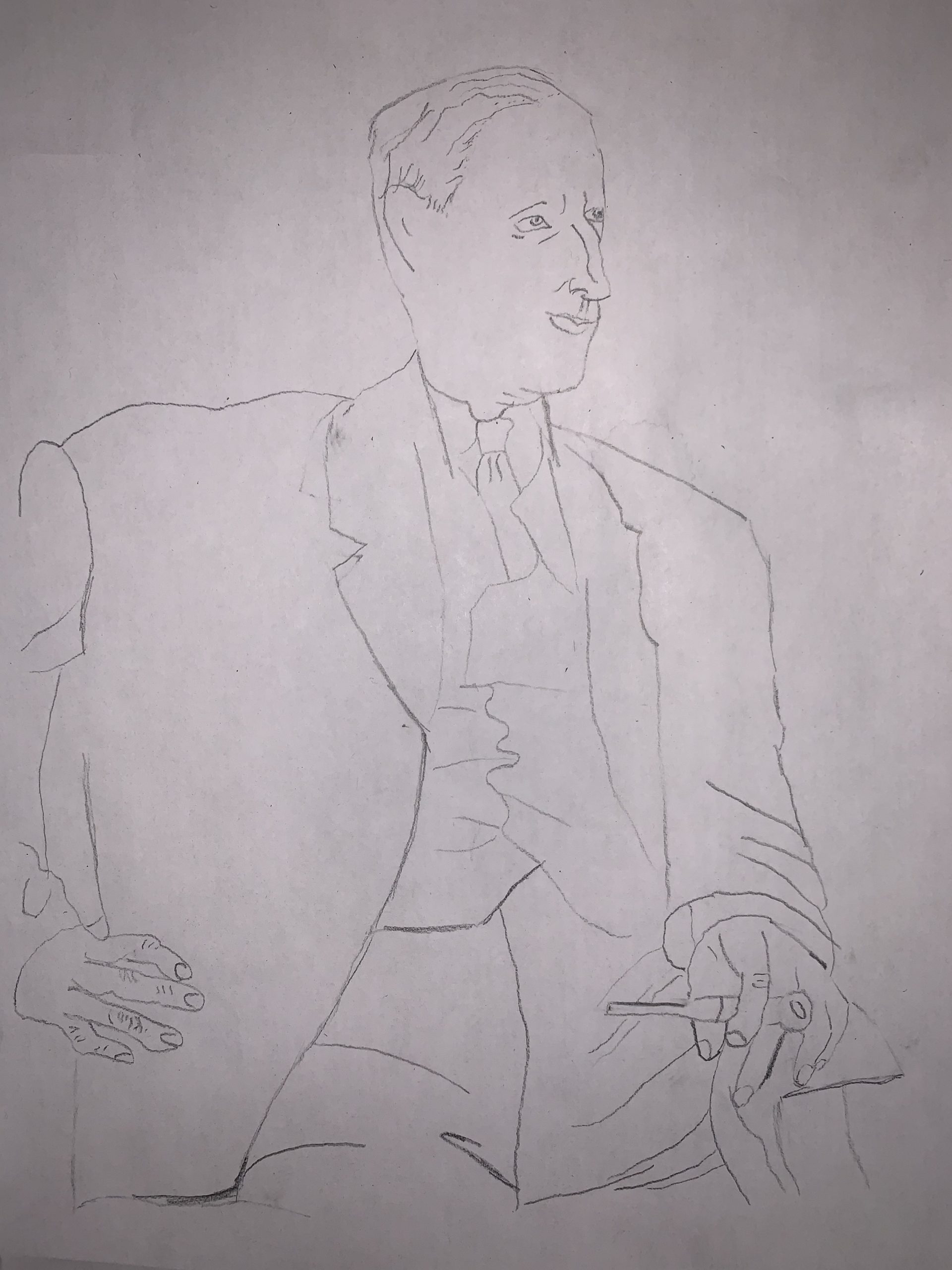
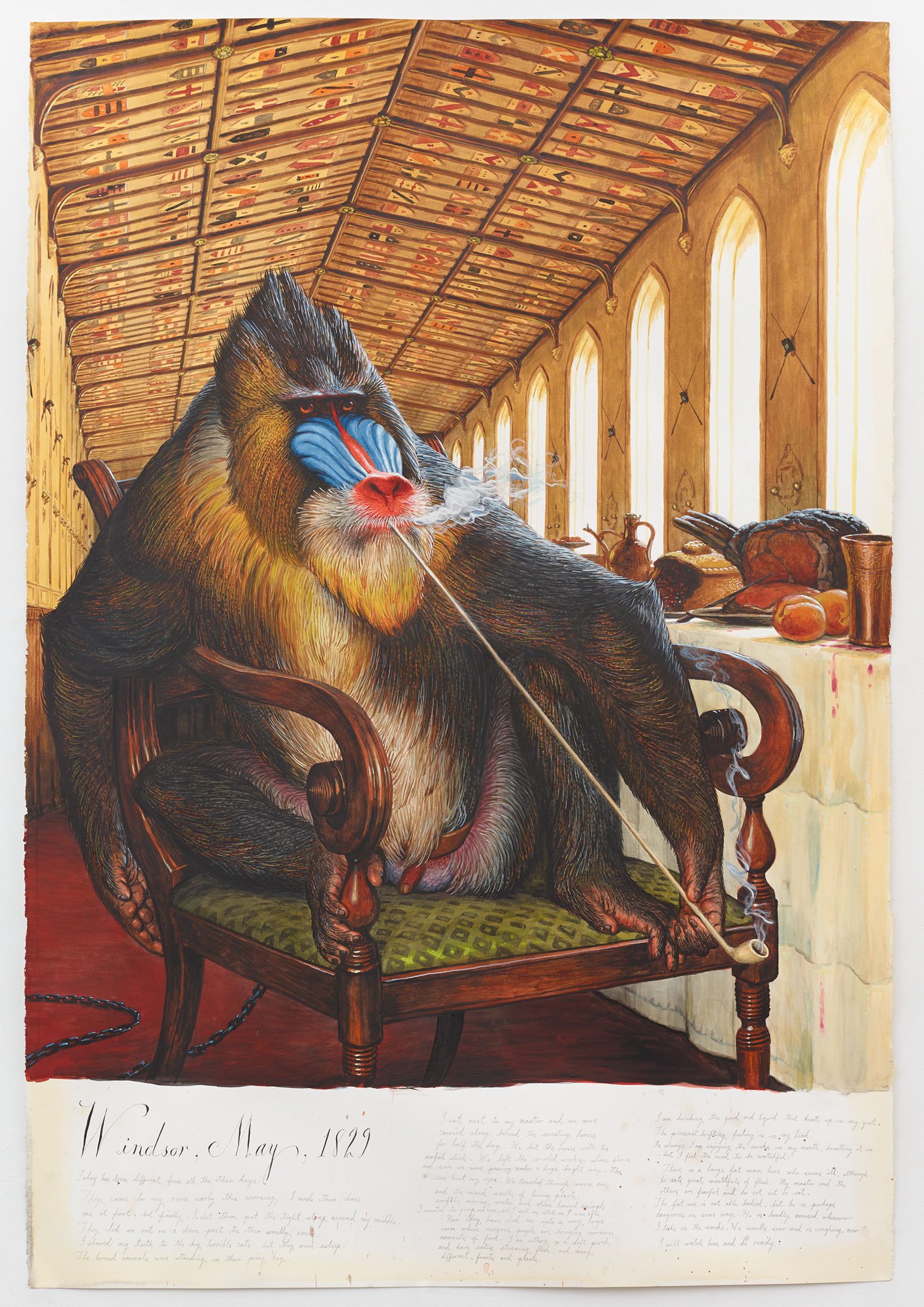
Walton Ford, Windsor, May, 1829
Immediate Response
After researching Walton Ford’s works, this piece stood out to me. The image captures a monkey living in luxury as he is found smoking a peice pipe and has all the food he would need in the world on the table across from him. It looks like he is reflecting outside of the window, reflecting at the sophisticated life he has had and experiences he has made, but still he is found chained. In Walton Ford’s work, it seems like he likes to visualize the pain of animals so humans can take away not a feeling guilt but also empathy.
Objective Description
In this portrait of a mandrill, instead of the monkey being in its natural habitat in the jungle, it seems that he is in the opposite, a high class dinning hall that seems like it is only suited for nobility. The mandrill takes up most of the page as he lously sits on a fancy wooden chair enjoying his long and slim piece pipe that almost takes up the length of the whole page. His eyes are locked in on something in the distance ahead of him but he can’t do anything becuase of the chain around his waist, which seems to be hidden by artists. On the long the ceiling above him there are thousdands of different naval/sailing flags that seem to go on endlessly and below on the white clothed table there are some of the finest meats and goods that any human of the time could get their hands on. Becuase of the windows lining down the hall, the lighting in the room appears as natural as possible and it gives the piece very smooth and relaxing colors.
Technical Decisions
This realistic oil painting truly makes you feel like you are in that dinning hall with the obese monkey. You can see every corner of the room, every expression on the monkeys face, and every crisp detail of the food beside him. The time is really well expressed in the detail of the inanimate objects around the monkey and it really sets the scene for this 1800’s style portrait.
The Work in the World
This painting revolvesaround the monkey in chains. He is tied up and there is nothing he can do but clearly he is an animal and is meant to be set free. In alot of his works, Ford often speaks out against animal cruelty in his works by exploiting the animals behavior and making it appear very human like. This is meant to prove that we relate to animals just as much relate ourselves to other people.
The Story it Tells
In Walton’s works, he will often give a back story to the main animal in the portrait. As you can see below the painting there is a small curvise blurb that is meant to really personify the animal and in this case, it really makes the monkey seem like he has “been places, and has seen many things”. The most profound effect this painting has on me is the sophistcation the artist wants to give the monkey. If you were to replace the monkey with a human you can see why the artist choose a monkey rather than a different animal. He is comparing nobility and class with a monkey who seems like he is just letting time pass away and watching the world go by.
Zach Fedor
Zach Fedor

this is the body of the post