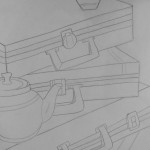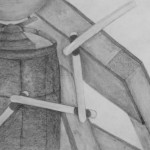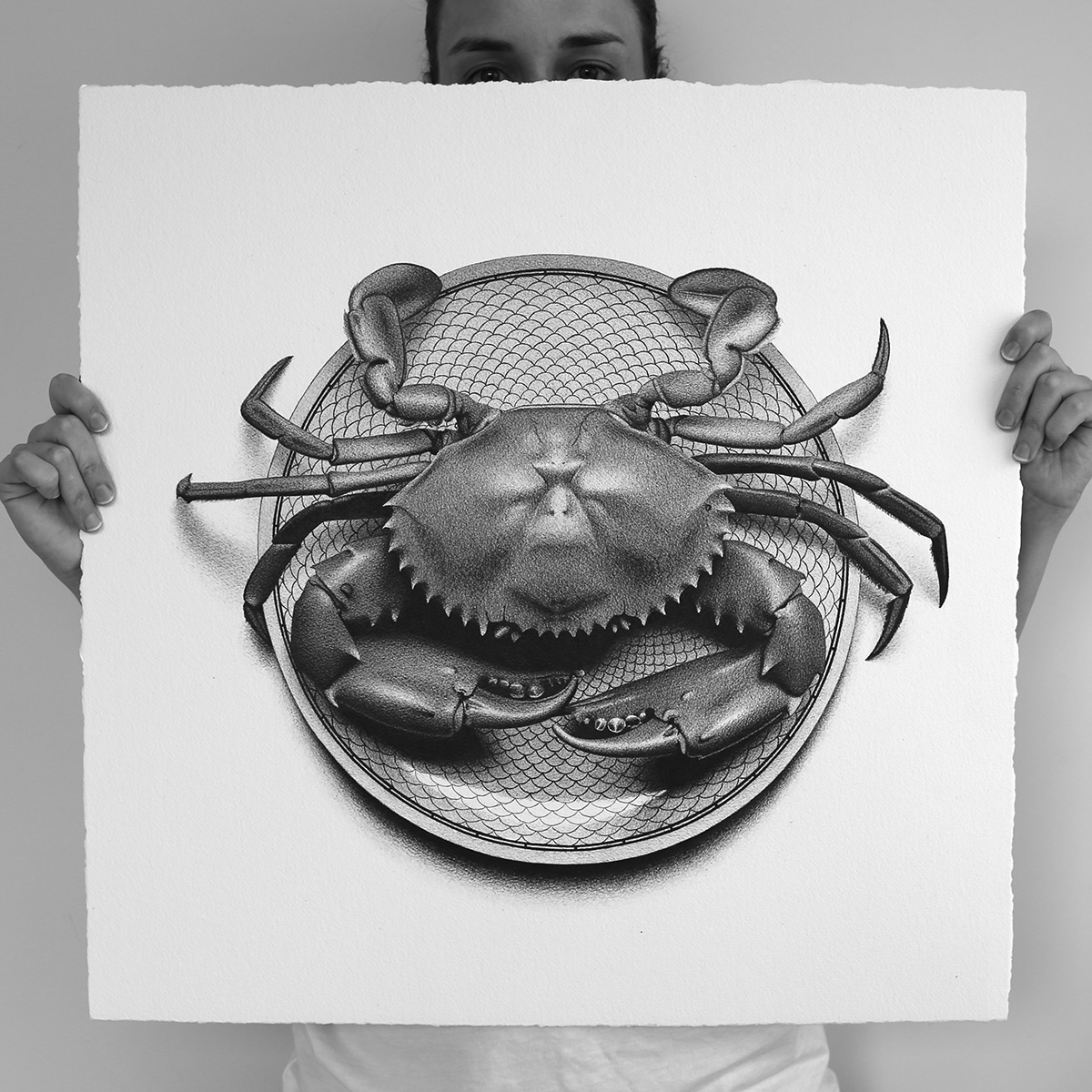
































































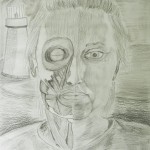


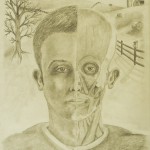
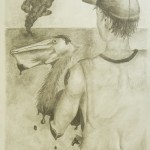
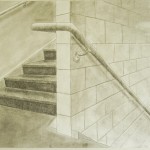

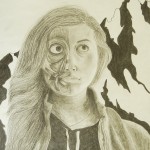




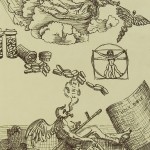



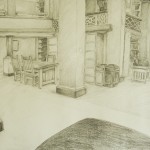
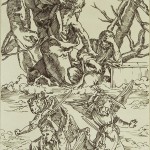
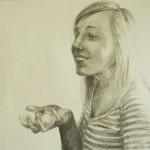


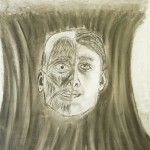
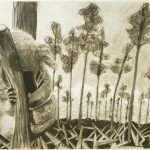





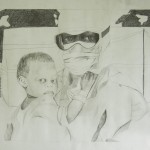













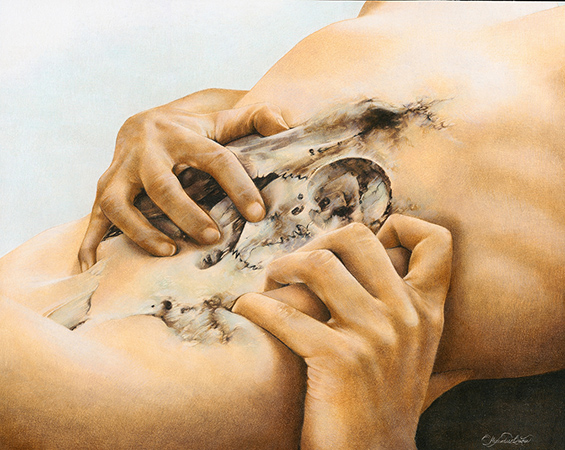

http://beautifuldecay.com/2015/04/06/hyper-real-drawings-alexandra-bastien-illustrate-life-death-transformation/
























































































The following article is from: http://www.streetdirectory.com/travel_guide/187781/communications/creative_presentation_openers_that_work.html
A great way to begin a presentation is with an attention-getting device that will get the audience EXCITED about listening to the rest of your presentation. Some of the best ways I have found to capture the audience’s attention are:
1. Rhetorical Question – A rhetorical question is a question to which no response is needed. Rhetorical questions are designed to be thought provoking, rather than answered out loud. An example of a rhetorical question might be, “If you were trapped on an island and could only have three things, what three things would you choose?” Not only does the audience begin thinking about how they would answer your question—they wonder how this will tie into the presentation (which by the way, it must) and suddenly—you’ve got them!
2. Relevant Story – Beginning a presentation with a story that directly relates to the topic is another great way to get the audience’s attention. A good story engages our audience’s hearts and minds and immediately draws them in. Make sure that the story is short (using a long story in the introduction can compromise the flow of the presentation) and makes a strong point. Here’s an example of an introductory story used for a presentation on the benefits of a 24 hour Nurse Line. “All of us have had frightening medical situations where the help of a registered nurse could come in handy. Let me tell you about a young mother, Marie, who was terrified when her two-month old infant son Sam woke up screaming in the middle of the night. He was burning up with a high fever and Marie didn’t know what to do. So she called the Nurse Line and they directed her to put him in a cool bath to bring his body temperature down. They stayed on the line with her until she was comfortable that she could handle the situation herself. Imagine having that kind of support available to you at all times of the day and night.”
3. Analogy – An analogy compares the known to the unknown, helping the audience better understand the unknown. When properly developed and explained, an analogy can be an interesting presentation opener. Here’s an analogy example… “Continuing to use this technology is like being on a lake in a rowboat full of holes—instead of patching the holes, all your time is consumed with scooping the water out of the boat.” You may not understand the technology, but now you know unequivocally, that it is like a sinking ship!
4. Humorous Anecdote – Humor is one of the BEST ways to win an audience over and get them enthusiastic about you and your presentation. Humor enhances the audience’s positive perception of you. When an audience laughs with you, chances are good they are also FOR YOU! The safest type of humor is stories or anecdotes that are uniquely yours. The problems you had traveling to get to your presentation make humorous presentation stories. Your dinner disaster is always good for a presentation laugh. One reminder worth mentioning–only use humor when you can relate it to the subject matter—irrelevant jokes are not suitable presentation openers. Here’s an example of a humorous anecdote… “There is nothing more humbling than the honest opinion of a five year old. I was feeling really good about this outfit this morning (even preening a little in front of the mirror) when my five year old daughter came up to me and said, mommy, are you going to wear that table cloth to work?”
5. Curiosity – Provoking the audience’s sense of curiosity can also help you capture their attention. When we are curious about something, we tend to listen more closely to see how it works out. The TV news trailers you see during Prime Time television often use curiosity to try to entice you into staying up and watching the late news. “Tonight at 11:00, find out what vitamin combination can save your life.” In the presentation realm, you might use a more subtle tactic, “Today, I’m going to tell you three important things that I guarantee will change the way you do business forever…” Because they are curious, the audience will pay close attention to see what those things are.
6. Gimmick – The sole purpose of a gimmick is to capture the audience’s attention, so it makes sense that beginning with a gimmick is a good strategy. An example of a gimmick might be… A presenter who is going to speak about the benefits of a paperless office begins the presentation by dramatically crumbling papers and throwing them away. He/She then asks the audience to throw away all the paper that has been planted in front of them. Note that everyone loves a gimmick, as long as it is in good taste.
Remember, incorporating a good attention-getter into the introduction of your presentation can mean the difference between being MEMORABLE or FORGETTABLE.
This is an example of a well written Art Report from a previous semester. Keep in mind that this student was following a slightly different set of instructions–your response will be a bit shorter than this example. Click here to view the Art Report guidelines.


Immediate Response
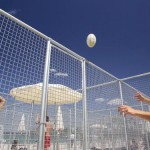
After finding the piece Bondi Beach by Gregor Schneider in the book Art Now on page 424, I was initially reminded of a large dog pound on an otherwise pleasant beach. I became focused on the limited space provided for the individuals inside and immediately was struck by a sense of claustrophobia along with a confusion as to why people would chose to enter the cages. I found it humorous that inside the extremely small spaces were efforts to instill comfort such as an umbrella, air mattress, and trash bag for convenience. The cages are an eye-sore at a beautiful beach, and an inconvenience for those wishing to relax in a calm area; however, people on the sand do not seem to be daunted by the cages. The people inside are content with their position, and those strolling the beach outside the fences do not even look over at the piece. Schneider’s work is a study of human behavior as well as an aesthetically engaging piece.
Objective Description
Gregor Schneider’s Bondi Beach consists of a free-standing connection of metal cages located on a populated public beach. The walls of the cages are twice the height of the average person and are of the standard design used in chain-link fences that are usually used in humane societies. The chain-linked fence allows for those inside to see the ocean as well as those outside to look in on those inside the cages. There are twenty-one cells, each of small dimensions, conveniently equipped with a beach umbrella, air mattress, and trash bag. The installation of these items give those inside a reason to be fully content with their choice of captivation. The number of people inside each cage varies. Some cages are empty, some have one person, and some are overcrowded; however, no one has made the decision to move to the empty cages. Also, there are numerous people freely wandering along the beach outside of the cage.
Technical Decisions
Schneider chose to construct his piece out of common materials which helps to depict a sense of “normality” in his work. Instead of constructing an abstract work, he constructed a common object (a cage) and placed it in an odd environment and altered its purpose. Instead of the cages being located at a local humane society, a knowingly unpleasant area, Schneider placed them at a typically beautiful, free location. Also, he replaced the animals expected to be inside with humans. What is unique about Bondi Beach is that the viewer becomes apart of the work. Whether he or she chooses to enter the cage or remain outside does not matter, either choice the individual makes adds to his piece. The fences are not all that is important, the items inside and the colors selected hold great value as well. The white umbrella attempts to add a mirage of tranquility as the blue air mattress mimics the color of the ocean directly outside of the cage to forge a connection with nature.
The Work in the World
As mentioned earlier, Bondi Beach is a direct reminder of dog cages at humane societies. They work as a confinement for seemingly “useless” things which add nothing substantial to society. Abandoned dogs that are typically in these types of cages are seen as a nuisance until a human, a species of higher rank, selects the dog to aid his or her life through companionship or more simply: entertainment. Schneider’s piece is also a distinct reminder of prisons or jail cells. However, this work deviates from a jail or prison cell in the sense that people willingly enter these cages. At a quick glance, these cages can remind one of internment camps as well; however, this connection fails for the same reason the jail and prison cell connection fails. These people contained in the cages are not confined, they are not restricted, they freely choose to give up their freedom and abandon their ability to wander for the comfort of modern day items.
The Story it Tells
Schneider’s message behind the work is clear: humans have become enslaved by their own creations. He constructed the piece out of previously man-made objects (the fence, umbrella, air mattress, and trash bag.) The man-made fence works as a barrier, the man-made umbrella serves as unnecessary protection, the man-made air mattress becomes luxurious comfort, and the man-made trash bag holds waste from manufactured items. Each of these things symbolizes the ways in which society has over-developed. We produce more than we need, which in turn destroys our natural instincts of survival. We rely on our inventions, even if they rob us of natural beauty, for example the construction of cities and elimination of forests. Even though we may realize we are walking into our own trap, such as the people entering the cages, we cannot deny the comfort that is granted inside.
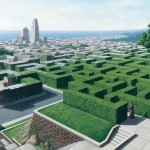
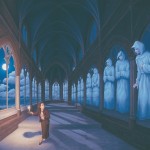
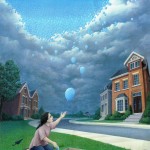
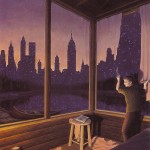
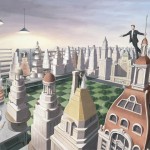
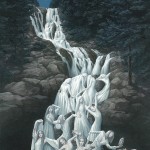
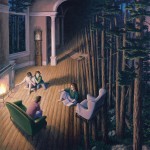
What kind of ambiguous space does Gonsalves create in his work?

















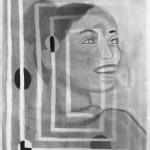


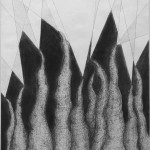


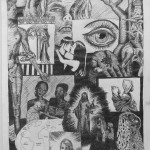

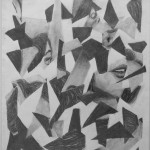













































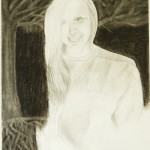
If video fails to load, click here: http://drawing.blogs.bucknell.edu/portrait-in-3-parts-photoshop-tutorial/






















































































































































































































































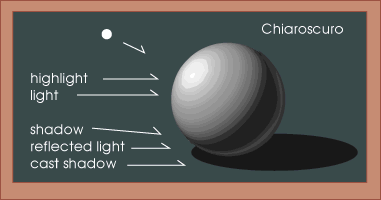
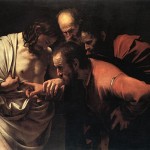
Chiaroscuro (English pronunciation: /kiˌɑːrəˈskjʊəroʊ/; Italian: [kjarosˈkuːro]; Italian for light-dark) in art is the use of strong contrasts between light and dark, usually bold contrasts affecting a whole composition. Chiaroscuro is also a technical term used by artists and art historians for using contrasts of light to achieve a sense of volume in modelling three-dimensional objects such as the human body. Some examples are included below: