Clea Ramos – Current Event Portrait Research, Steps 1-3

Step 1: 10 Reference Images


Step 2: Written Response

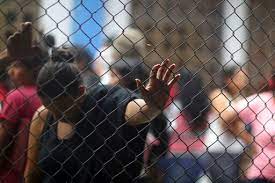
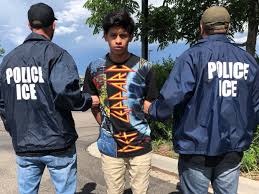
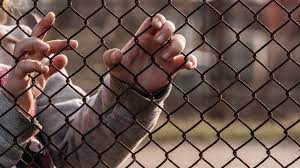
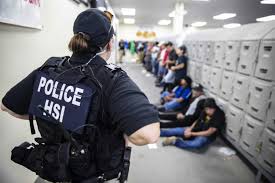
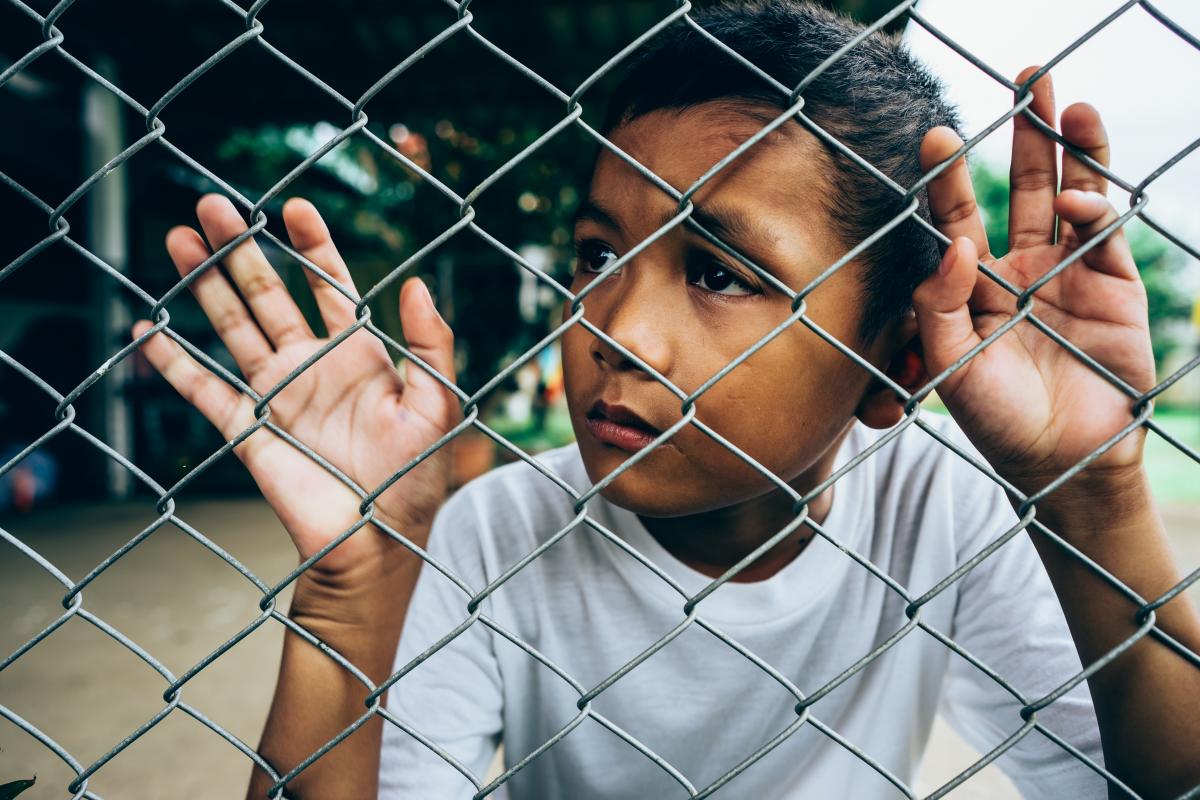
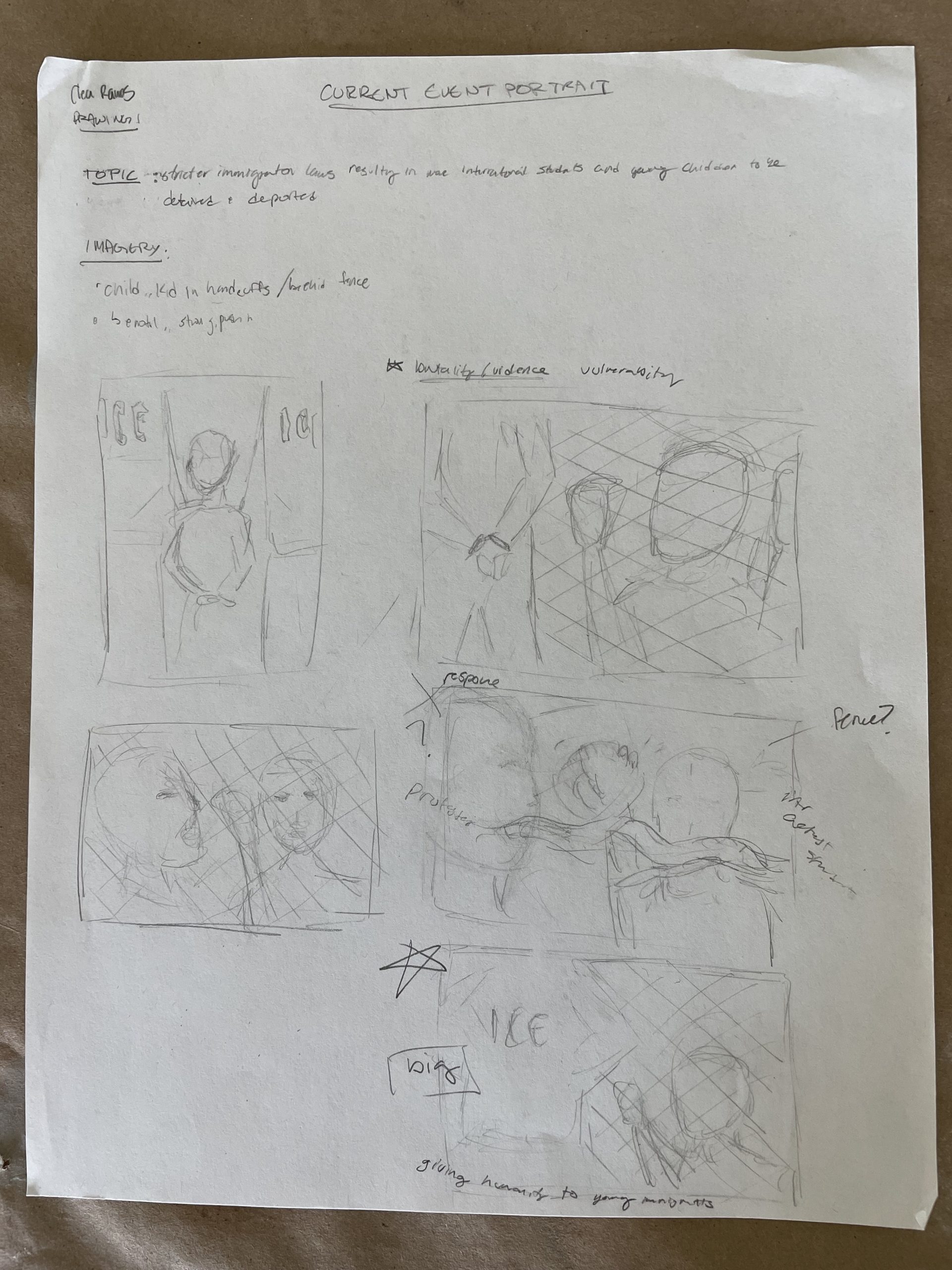
Under the new administration, stricter immigration laws have resulted in more detained immigrant families with young children, and more international students. To many, the reasons for these detainments may seem unfair and unjustified and as a result. I have chosen this topic because as a daughter of immigrants, I empathize with the stories and struggles of those who come to the U.S. seeking a better life. It is heartbreaking to see families who have worked hard to establish themselves and provide a better future for their children suddenly and  aggressively detained due to their immigration status.

In my research for this project, I learned about a recent event of an undocumented immigrant family, including their young child, who was arrested by ICE. I want to include a representation of this detained child in my drawing as well as an  ICE police officer to draw attention to the unnecessary aggressiveness and brutality of the enforcement efforts, which often result in the vulnerability, emotional trauma, and tragedy for immigrant families and their young children. I want to represent this event in an objective and realistic manner to elicit an emotional and resonant response by focusing the composition on the sadness and vulnerability of a young, detained child. So, I hope to emphasize the emotional fear, and vulnerability that undocumented immigrant families currently face as a result of immigration laws and the hostile efforts of ICE.

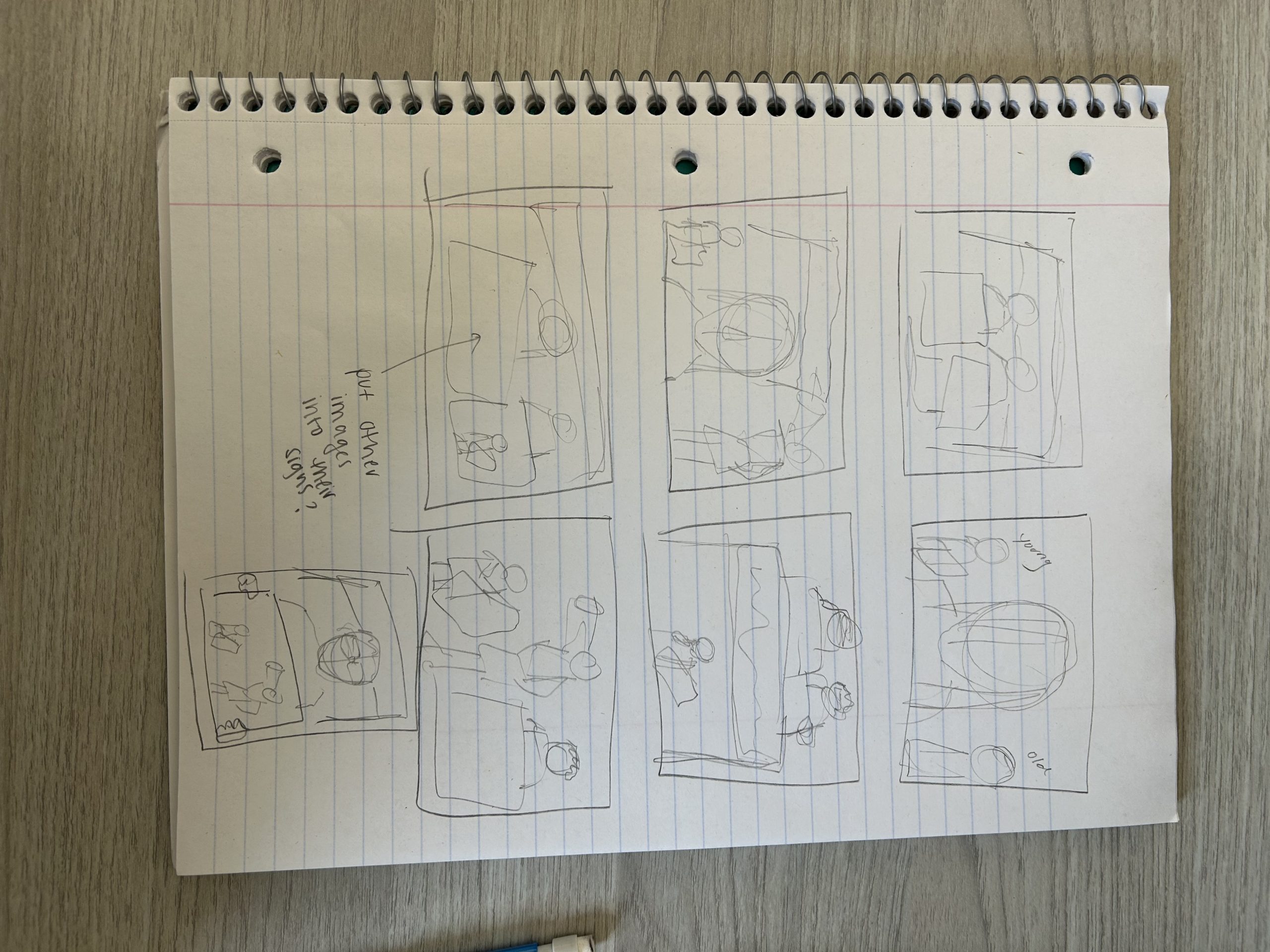
Step 3: Thumbnail Sketches
Climate Change – Lulu Coll

I’ve chosen to explore climate protests and environmental action, focusing on the emotional and symbolic connection between humans, animals, and the Earth. With the increasing impact of global warming, extinction, and natural disasters, the planet’s suffering is being echoed in passionate climate protests around the world. I was drawn to this topic because of how deeply it connects people, animals, and nature and how visual the crisis has become.

My drawing will feature two central figures: a young climate activist and a symbolic representation of the Earth Possibly a woman with cracked skin and flowing rivers for hair, or a globe being held like a fragile object. Around them, I’ll include endangered animals (like polar bears, sea turtles, and birds) either interacting with the figures or fading into the background. A suited corporate figure or politician may appear distant or indifferent in the scene.
Another idea is a hand holding up a match burning earth.

I’ll represent the issue from a rhetorical point of view, evoking empathy for the planet and animals. I want the viewer to feel a sense of urgency, grief, and hope. I’ll use expression, symbolic interaction, and dramatic mark-making to reflect themes of loss, responsibility, and connection.

https://docs.google.com/document/d/1MgiNZ_uMAg5J9V8ruIq_bzKheEhj4dCjhvStVrSN77E/edit?usp=sharing

technology Current Event

I have chosen to depict the growing digital addiction surrounding TikTok and AI usage and its potential impact on cognitive development. This artwork will feature everyday users—young and old—lost in the endless scroll of digital feeds, symbolizing how modern technology captivates their attention. A central character, representing an archetypal user, appears physically present but mentally distant, absorbed by a vivid, glowing screen. In the background, a symbol representing TikTok and AI’s relentless allure, its many eyes reflecting the hypnotic patterns of viral trends. There will also be a focus on the brain, which will be leaving the body- to show how these programs can affect our minds.

This representation is meant to show the dangers of technology, presenting the effects it has on the mind. The emotions conveyed are tension, distraction, and a faint melancholy—a portrayal of intellectual fatigue and diminishing focus. This is achieved through the use of fragmented linework, and contrasting digital light against the human face. Ultimately, the piece invites viewers to reflect on how constant connectivity might be gradually undermining our cognitive functions

Current event Antek Nowacki

My topic would be genetic engineering to revive extinct species, inspired by the recent development of wooly mice. While fascinating from a scientific perspective, I feel the fanfare around this achievement shows a human tendency to distract ourselves with the future to stop thinking about the issues of today. 

The characters in this picture are the wooly mouse and the mummified wooly mammoth (based Lyuba, an actual specimen). The former represents the excitement of scientific achievement, but also humanity’s fascination with futurism and its use as escapism from the present. Engineering new, intriguing species, but neglecting the countless animals in need of conservation and support. The latter represents the grim reality of decay and extinction, representing both species lost to time and those on the verge of extinction. The corpse of Lyuba stands as a stark reminder, that if humanity does not start caring about the present, it will repeat the mistakes of its past and destroy any biodiversity our planet has left,

My stance on this view is subjective, as I believe one cannot ignore the past and present in their pursuit of the future. Progress is good, but our current reality cannot be forfeited to achieve it. 

The emotional core of this drawing is the contrast between the palatable, pleasant visage of the mouse (the appetizing idea of futuristic progress) contrasted with the shriveled, grim reality of decay and extinction evoked by the mummified mammoth. 

PEPSI/POPPI

I chose to focus on Pepsi buying Poppi because I care a lot about people eating healthy, and this deal feels like a turning point. Poppi built its brand around gut health and natural ingredients, and now that a massive company like Pepsi owns it, I’m wondering if it’ll stay the same. Will they keep the ingredients clean, or will things slowly change to boost profit?

In my drawing, I want to show Poppi as a more petite, brighter figure—fresh and happy-looking—next to a more prominent Pepsi figure that feels more corporate and a little overpowering. I might also add a person who represents everyday people, like the average consumer, caught in the middle of this deal and unsure what to think.

I’m not going for an objective look—I want to show my point of view. I’m skeptical. I’ll try to show how Poppi and Pepsi interact, maybe through their body language and facial expressions. I want the drawing to reflect hope but also concern and show the tension between a trustworthy brand and a company known for being more profit-driven.

Current Event – Iyannah Ali

The topic that I have chosen is texturism because though it hasn’t gotten as much attention as other topics recently it is a something that relates to and is personal to me. With the threat of DEI programs being removed and discriminatory hiring slowly making a more bold return I wanted to shed a light on a less spoken on form of discriminaition that could also become more prominent under the erasure of DEI. Out of all the other topics that I though of speaking on this is the main one that I felt a burning need to use and show from a more personal point of view.

Texturism – “the discrimination and social marginalization of people with naturally tighter curl patterns or coily hair textures, while privileging those with straighter hair textures, rooted in Eurocentric beauty standards” (richlandlibrary.com).

The main characters that I will include in my drawing with be a little girl getting her hair done by her mother. There will be other people portrayed using some form of media from either a phone of a TV. I will try my best to represent this event as objective as possible because I’m not trying to persuade anyone I just want to shed a light on the different experiences texturism has led to. The emotions that often pronounce are sadness and anger which can be communicated there the expressions of the figures face’s.

Current Event- Jaycee Birkemeier

I have chosen women’s rights as my topic because it is an issue that is personal to me. I want to incorporate different women and/or different ages of women into this piece, as well as possibly using my own pictures from protests and marches that I have been to myself. I think this would add a cool perspective to the piece by drawing on my own experiences, as well as make it more different with the use of my own reference photos. I will be representing this piece in a rhetorical manner due to the fact that with this topic I already have implicit bias and strong beliefs in relation to it. I think my stance will be drawn out clearly due to the lens of protesting I am planning on projecting through. I think my topic has a lot of underlying emotions, and that mix of feelings propels the idea of fight and hope, and I think this idea can be shown within my characters faces as well as through the writing on posters and/or banners.

Proteus-Yuan Zhang

I learned a lot from this film but one thing that was really interesting to me was that despite their complex structures, every radiolarian is only a single cell. I found Haeckel’s struggle with being pulled in multiple directions both when it comes to religion versus science and science versus art not only interesting but also highly relatable. I felt a similar struggle myself when I first graduated as part of me felt that I should stay in China and focus on searching for job opportunities, but at the same time there was a part of me that was drawn to traveling and experiencing cultures that I had never seen before and that is what drew me to attending Bucknell University. For years I have always considered science to be a very practical field that didn’t have much room for artistic and creative expression. While there was room for creative new ideas when it comes to problem solving and discoveries I had always assumed that there wasn’t much room for art or other creative efforts within the field. However after watching Proteus I found Haeckel’s story very inspiring as he was able to not only continue being an amazing scientist but also found a way to integrate his passion for art within his research in such a way that one would not be complete without the other. For me this was really impressive as I had always assumed art and science were completely unrelated fields of work.

APK- Geometric Radiolarians

From the film I was able to learn about how radiolarians are surprisingly intricate and tiny organisms that have intricate and unique skeletons that are made up of silica. Their underlying symmetry is mesmerizing due to its complexity and small scale. It proves that nature is beautiful and intentional even to the most minute detail. Haeckel’s work on radiolarians was so interesting because there was never only a focus on their scientific significance. He also understood them for their significance artistically. Throughout his studies, he continued to engage with their nature as cells but also as works of art from the natural world. I think this film showed me how art and science can be irreparably intertwined with one another. Without artistic skill, studying the geometric patterns of the radiolarians would have been a nightmare, and using helped to enhance the scientific understanding of the cells. While they are separate pursuits they can still collaborate in a way that enhances both. I think it was interesting how Haeckel’s environment shaped his understanding of science. Despite his understanding of phylogeny, he still fell to the same trapping of racial sciences as many of his peers. Despite their relevance today, many of his theories are products of their time.

I found it really cool how the film used those sequences of images to help us understand just how diverse the radiolarians are. By the end of the film I found myself realizing that I had almost never seen the same one twice. It really drove home the point that the forms these cells could take is practically inexhaustible.

Proteus: Two Worlds

The film Proteus showed how radiolarians are more than just microscopic organisms. They’re a perfect example of how nature is both scientific and artistic. Haeckel was obsessed with them, seeing them as a key to understanding life, and he spent his career drawing and studying over 5,000 species. What stood out to me most about Haeckel was how he combined science and art. He was capturing nature from a scientist’s view while capturing the beauty of nature from an artist’s view. It made me think differently about the relationship between the two. His work proves that art isn’t just for expression and science isn’t just for facts; they can work together to shape how we see the world. The film also showed how people used to see nature as fixed and unchanging, but by the 19th century, science revealed that it was constantly evolving. Haeckel’s admiration for Goethe and the Romantics, who saw nature as alive and imaginative, made him question traditional religion and search for meaning. Another thing I didn’t expect was how much new technology, like the telegraph cables across the ocean floor, changed what people knew about marine life. Before that, scientists thought nothing could survive in deep water, but discovering organisms on the cables proved them wrong. The film also made me think about how Haeckel struggled with his identity. He was studying to be a doctor and then as a scientist, but he loved painting and almost gave up science for art. His time in Italy, where he met poets and artists, deepened that struggle. Seeing how he was constantly pulled between logic and creativity was interesting, which I think many people can relate to.

Proteus-Jaycee Birkemeier

Before watching this film I didn’t even know what radiolarians were. It is really cool to see how complex, diverse, and abundant single celled organisms can be. I was also really intrigued by the way Haeckel would draw all of them, and in a short amount of time when they were only able to stay alive outside of their natural habitat for so long. These organisms were used as sort of a pillar within this film, around them being the history of scientific discovery around life, Haeckel and his life’s work, and the competing notions of art versus nature. I found it interesting that a main issue that was arising from new discoveries was the beliefs of religion versus science. It was engaging to see how Haeckel was grappling with these opposing views within himself, and how his ideas changed as time and science progressed. Personally, it was really compelling to see how Haeckel managed to balance his naturalist perspective, scientific knowledge, and drive for exploration with his artistic side and need for romanticism throughout his life. As a biology major, it was cool to see him incorporate creation of art within his studies in the scientific community. Lastly, one part of the film that stood out to me was the idea of “embracing the opposites”. How can one embrace both religious and scientific views, man versus nature, art versus science, and so on. 

Clea Ramos – Proteus Response

In this film, I learned that radiolaria are microscopic, single-cell, oceanic plankton, that have a network of branching pseudopods that engulf and absorb tiny prey. They absorb silica and extrude it to create a unique, radial skeletal structure, which inspired their radial name. They are within the kingdom Protist, whose name is derived from the Proteus, a Greek god of rivers and oceans, who is known for changing his shape. He is mutable and capable of assuming many forms, which is fitting for radiolaria since it can assume many forms. This subject matter was most intriguing to Haeckel because he was both interested in the scientific, biological and evolutionary aspects of radiolaria as well as the artistic forms that they appeared in. His interest in both the scientific and artistic aspects of biology was intriguing to me, especially as someone who also has interests in both STEM and art. His appreciation of visual arts allowed him to further appreciate and record in detail the radiolaria as he describes them as girds, nets, stars, bowls, helmets, houses, towers, etc. He appreciates the aesthetic and pleasing shapes of the radiolaria as well as their scientific importance. 

This film reminded me that art is everywhere and exists in everything from nature, science, technology and more. The principles and elements of art including unity, contrast, repetition, line, form, color, are seen everywhere, but it takes a keen eye and interest to find the art and beauty in everyday things, even subjects like science that may seem far from creative and artistic. 

I’ve found Haeckel’s evolution theory interesting as it claims that evolution grows upward and is self organizing, so that it is an endless cycle of the refinement of structure. I agree with this because it suggests that no creature or life form is ever in its final state; its form can keep changing and adapting to its environment. I interpret this theory such that nature is a never ending artistic process that constantly changes and is redesigned to adapt. This is similar to the design process in art – a product or a design can keep changing to fit criteria or circumstances to achieve value, efficiency, purpose, aesthetics, and beauty.

Emma Cameron – Toy Story

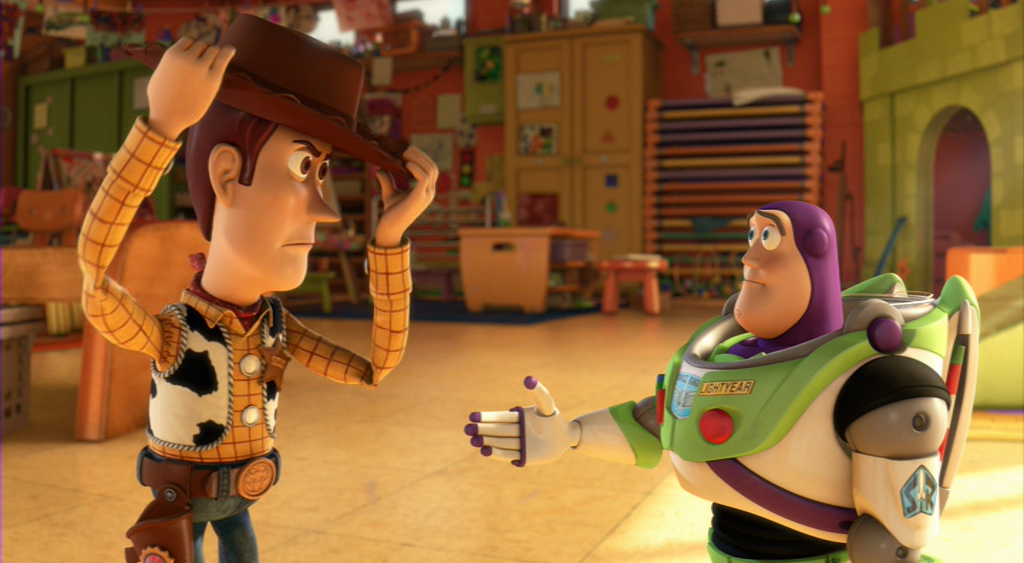
I selected the movie Toy Story as the story for my Revisionist Storytelling Drawing. I often watched this movie as a kid, and now I find that it resonates with me as it explores themes of identity, change, and growing up. 

A key moment in the story is when Woody pushes Buzz out of a window. This shows his feelings of insecurity and doubt in himself. This turning point shows that fear and a lack of confidence can cloud judgment. However, Woody eventually being able to overcome those feelings in the end shows maturity and acceptance in himself.

In my artistic interpretation, I’ve depicted various toys and playful objects in a darker, shadowy setting. This contrast between the fun and random objects with the shadows shows the mix of emotions and internal conflicts that come with being a kid. The darkness highlights the complexity of growing up.  Additionally, the clock looming in the corner represents how change and getting older is inevitable. By altering the tone of the original story in this way, I aim to emphasize that while the surface may seem light and playful, there are deeper, more serious emotions at play beneath the surface.

Antoni Nowacki, “The Vengeful Sparrow”

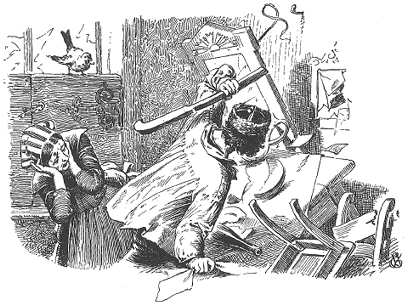
For this assignment I’ve chosen to retell the Brothers Grimm story of the Dog and the Sparrow. It follows the titular bird, who befriends an abused dog. He brings him food and keeps watch when he sleeps. Tragedy strikes when the dog gets run over by a carriage, despite the sparrows’ attempts to stop it. The bird then takes his anger out on the carter, tricking him into killing his horses and destroying his carriage and load. He makes every bird nearby ravage his house for seeds, and he lets him destroy all his belongings in a blind rage. The climactic turning point happens when the man captures the sparrow and decides to swallow him. The sparrow resists and breaks loose, taunting him through his teeth. The carter’s wife, in a last ditch attempt, takes a swipe at the bird with a meat hook. She kills her husband on the spot, and the sparrow flies away. 

In my retelling however, I want to focus more on the sparrow itself. The story cuts off after the man dies, but for the bird to wreak such havoc in his grief, I’m sure that when the man fell down lifeless he still did not feel satisfied. I want to omit the dog at all from my diorama to highlight that all the destruction and pain the sparrow has caused, including the death and misery of innocents (horses or the carter’s wife), did nothing to replace the bird’s beloved friend. I want the sparrow to be highlighted among the violence he has enacted, showing that in his pursuit of retribution, he embodied tenfold the qualities of the dog’s killer. He flew away, defiled and unsatisfied, now forced to grieve without an enemy to distract from his loss.

Donna Ebenstein, Perseus & Medusa

I chose the myth of Perseus and Medusa, because I have always been a fan of Greek myths. In addition, I visited Sicily last year, and Medusa’s head is on the crest of Sicily.

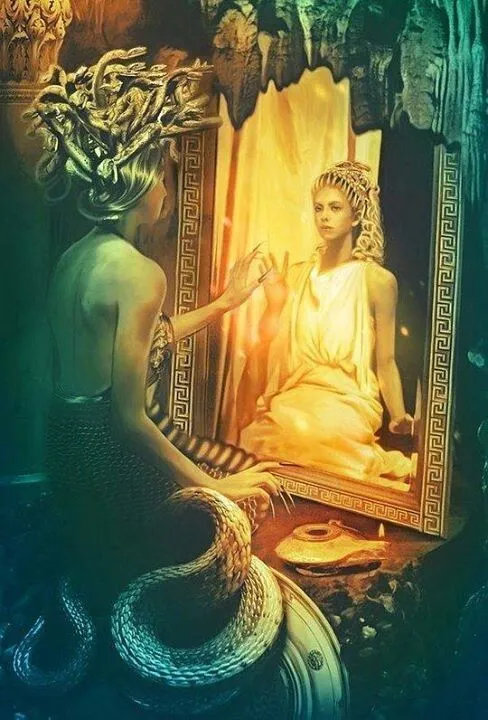
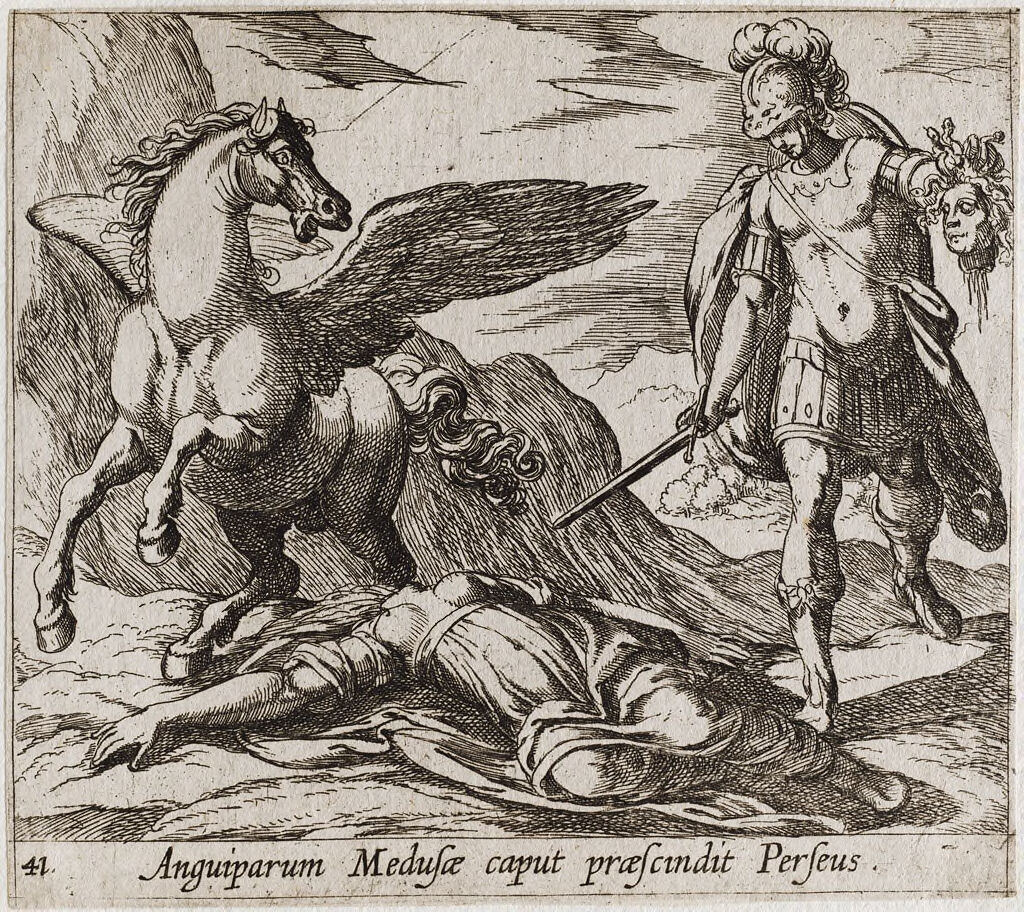
The key scene I chose was the scene where Perseus sneaks up on Medusa on a desert island where she is living with her two immortal gorgon sisters (Medusa is the only mortal one) and cuts off her head.  Perseus needs Medusa’s head because the father of the girl he wanted to marry demanded it as part of his bride price, so Perseus is doing this task out of love.  Medusa is viewed as a monster, because she turns men to stone and has snakes for hair. But she used to be a beautiful maiden before she was cursed to become a Gorgon.  Perseus received assistance from the gods in this task, including a magic sword, a mirror-like shield, and a special bag to hold her head after he cuts it off.  When it is time to do the deed, he sneaks up on Medusa while she is sleeping with her sister on a desert island and cuts off her head, using the mirror of the shield to look at her to ensure he doesn’t get turned to stone.

I am showing this scene from Medusa’s perspective, where an overpowered evil man (represented by Darth Vader) sneaks up on an innocent girl to cut off her head with a magic sword (a light saber) in the name of love.  He only sees the snakes on the back of her head, and views her as a monster.  But she still sees herself as a beautiful maiden forced into exile because she is viewed as a monster, innocently living on this island in the middle of nowhere, not harming anyone. The mirror is cracked because when Medusa no longer wants to look at herself in a mirror, doesn’t want to see the monster she has been turned into.

Samantha Landolfi – Strategic Slipper

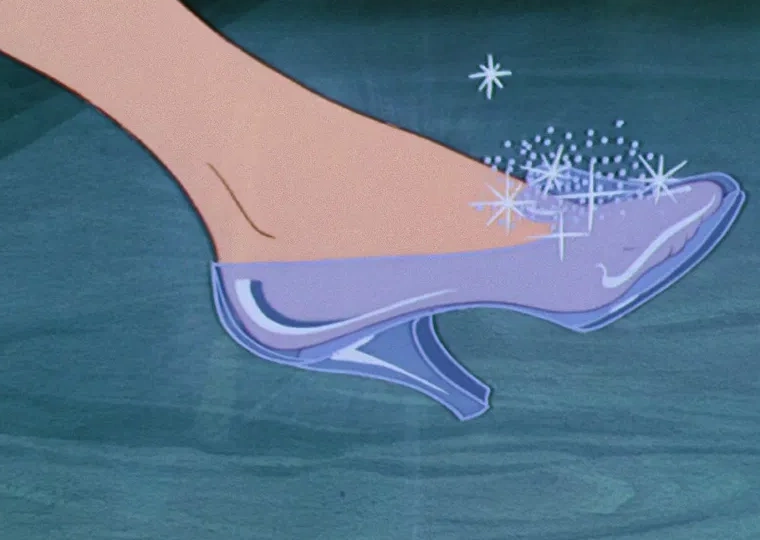
In this story twist, Cinderella is not just a naive princess but a strategic and smart one. As Cinderella heads to the ball, she knows that once the clock strikes midnight her beautiful ball gown will turn back into rags. Once she meets the Prince and dances with him she knows that she will want to see him again. However, she realizes that her evil Stepmother will not let this happen and will do everything in her power to stop this. As midnight approaches Cinderella comes up with a plan for the Prince to find her. When the clock strikes twelve, she runs down the steps off the palace and purposely leaves her glass slipper on the ground. Cinderella knows that the Prince will see the shoe and locate her. Even if her Stepmother tries to hide Cinderella from seeing the Prince she will not be able to do anything once the slipper fits Cinderella perfectly. Overall, this story twist shows Cinderella as a intelligent and wise princess that is going to get what she wants and truly deserves. She does not want to live in the shadow of her Stepmother and step-sisters her whole life but rather achieve her goals and dreams.

Clea Ramos, Daedalus and Icarus (Revolutionist Storytelling Steps 1-3)

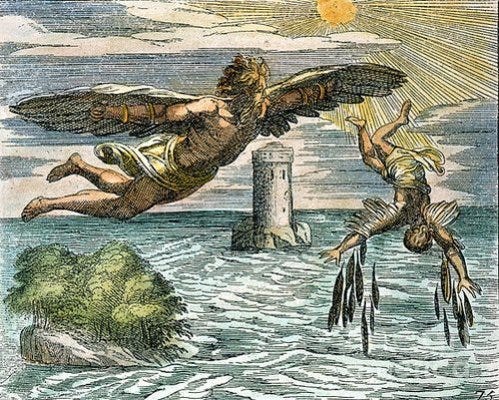
I have chosen the Greek myth of Daedalus and Icarus. Daedalus, an inventor, made wings of wax and feathers for his son Icarus. He told Icarus not to fly too close to the sun, or his wings would melt. But Icarus did not listen; the warmth of the sun melted his wings and so  he plummeted into the sea. I selected this myth because it is one of my favorite Greek myths with a lesson about the risks of being over ambitious by trying to reach the unattainable. It serves as a reminder to not “fly too close to the sun”, and instead to appreciate what you have and to be reasonable. I also thought that the story would translate well for this project due to the imagery of the sun, water and wings. The key moment I have chosen to depict is the moment where Icarus’ wings melt and he falls into the sea. This climax of the story is a dramatic moment that artists have depicted over centuries to capture the story, so I am eager to create my own rendition of this scene with found objects. However, in my diorama, I have included a large hand reaching out from the sea grabbing on and catching Icarus the moment he touches the son. This hand could be interpreted as Icarus’ father, Daedalus, saving Icarus from his death, which is symbolic of the paternal love and support for their children, especially in moments of failure.

Jaycee Birkemeier-Long Golden Hair

animated tradition ...

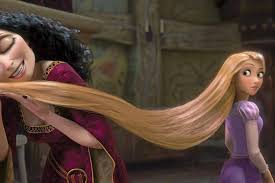
I decided to choose Rapunzel as my story because growing up I have always loved the Disney movie inspired by it; Tangled. Although Tangled is not the exact same storyline as the original Rapunzel fairytale, it is the one I know better so I will be basing this project off of it.

One major turning point for the main character, Rapunzel, is when she decides to leave the tower. All her life her “mother” has kept her trapped in the tower and told her how scary and dangerous the outside world is, and Rapunzel has believed her and never strayed from the tower. Her escaping the tower is an important moment for her, as she chooses to be brave and lets her curiosity take over and make her own choices.

In Tangled, Rapunzel’s “mother” is depicted as an evil witch, who has kidnapped her at birth and kept her hidden in a tower to use Rapunzel’s special powers all for herself. In my depiction I will make it so the witches’ decision to keep Rapunzel locked in the tower is not out of greed but instead out of love and fear for Rapunzel. A main theme from the story is that the witch tells Rapunzel that the outside world is scary and dangerous, and I think it would be cool to feed into that, and twist the witch to be caring and trying to look out for Rapunzel in fear that others will try to use her powers for themselves. 

Katherine Rhine, The Drunken Dream of Wonka

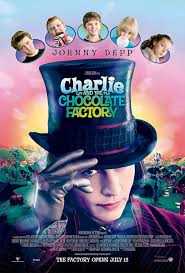
I chose Charlie and the Chocolate Factory for this project because it’s one of those stories everyone knows—The Golden Ticket, the spoiled kids, and Wonka’s Factory. Each kid’s fate pretty much matches their personality and self-obsession; Charlie wins because he’s the only decent one. At its core, the story is about imagination, consequences, and how being a good person actually matters. It’s stuck around so long because it’s fun, a little weird, and still makes people think about what they’d do if they got their own golden ticket. Plus, the images of candy definitely help keep people interested.

One moment I focused on was when Wonka announced the factory’s reopening. It’s what kicks everything off, but I started wondering—what if none of it was real? I had chocolate and a wine glass sitting in my room, and it got me thinking: What if Wonka, after a few too many drinks, just made the whole thing up? What if the factory, the golden tickets, and even the kids were all part of some elaborate fantasy?

In my version, the story would lean into that idea, blurring the line between reality and imagination. “Wonka” is just a regular guy who dreamt of this whole idea of owning a chocolate factory to leave their boring reality. My art piece resembles this idea by making the viewer wonder if this popular movie was some normal guy’s escape.