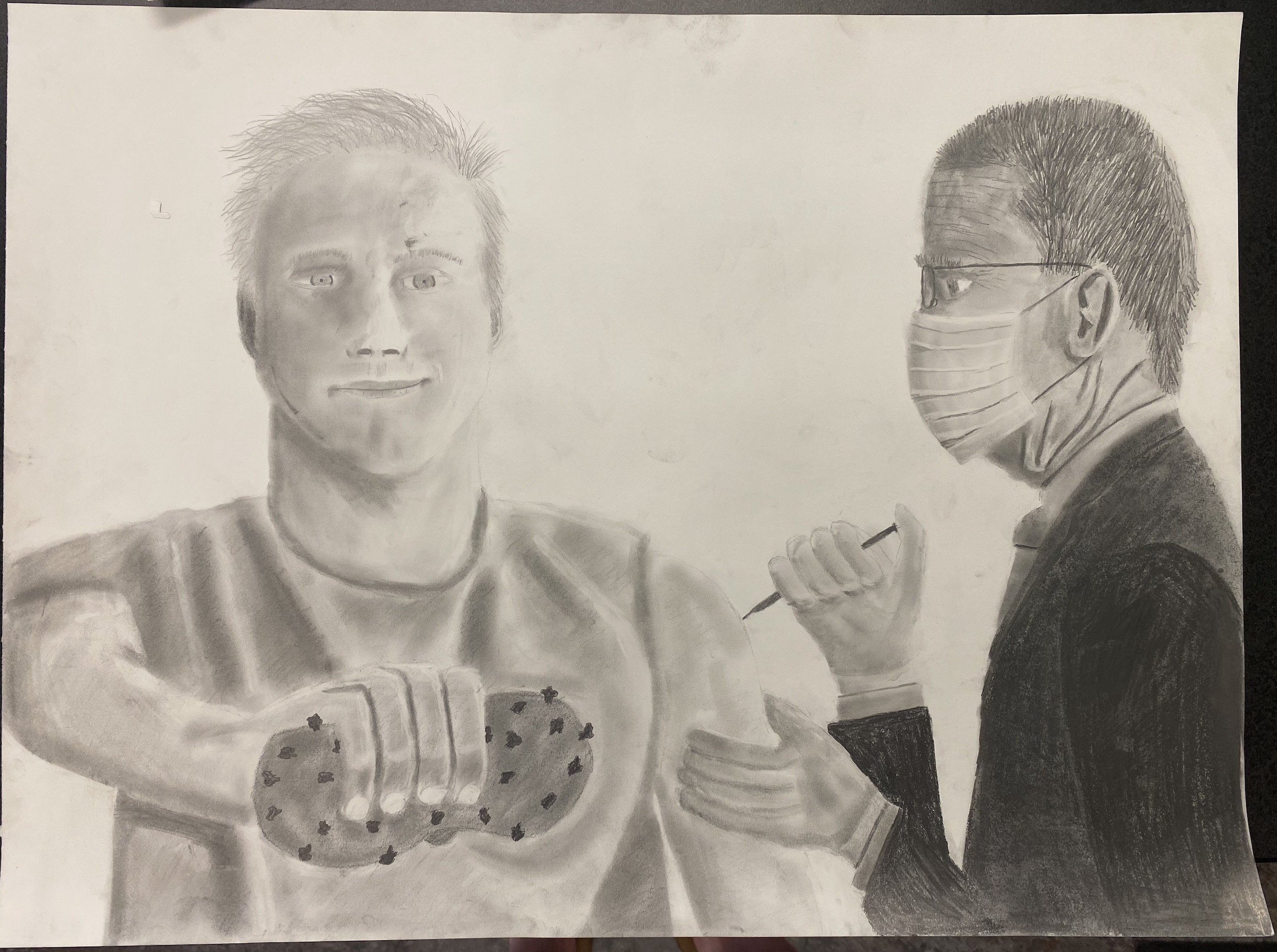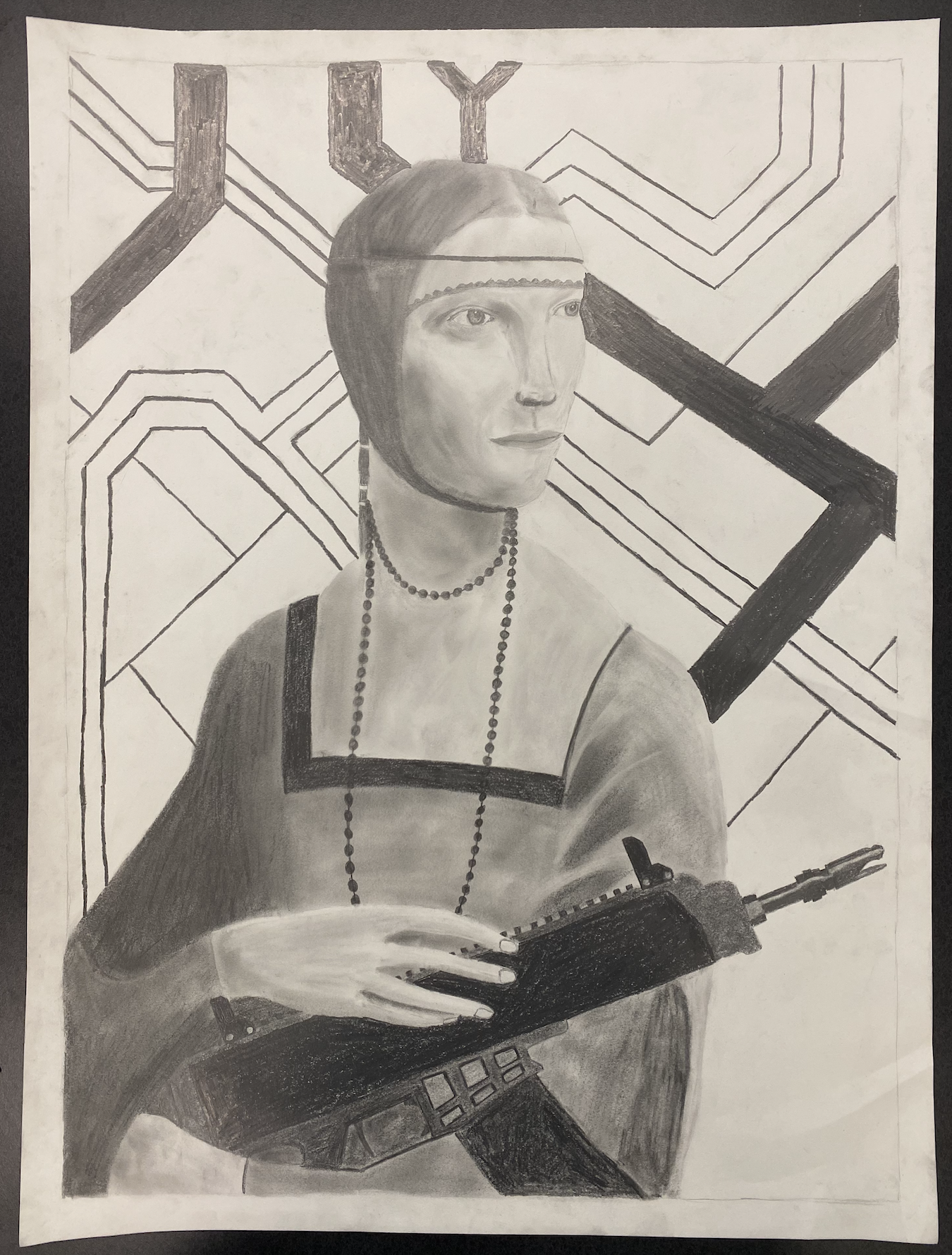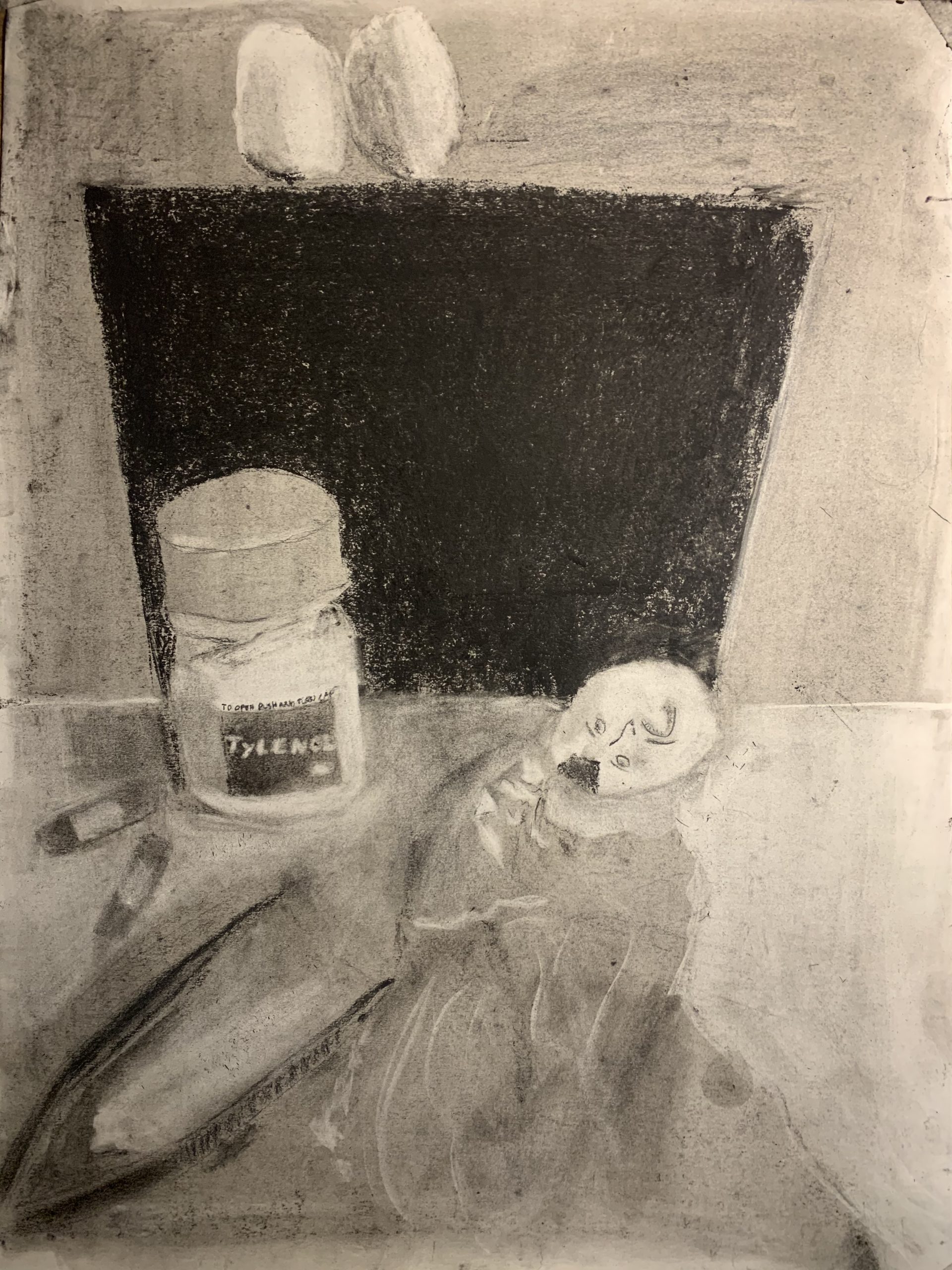
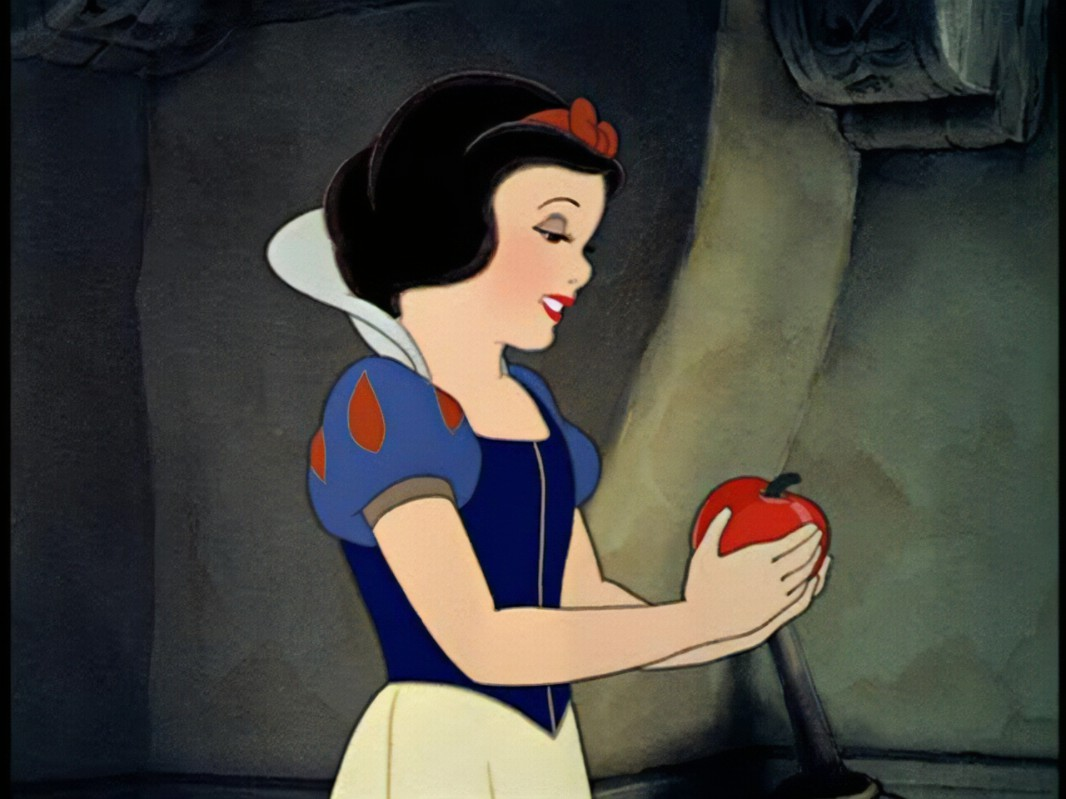
I chose to do a revisionist take on the story of Snow White and the Seven Dwarves. Snow White is a fictional disney character that is mainly known for her singing and ability to talk to animals. I chose this story because I loved watching princess and disney movies as a child and this project gives me a feeling of nostalgia. The key event of this story I am rewriting is the part where the queen, Snow White’s evil stepmother, attempts to poison Snow White with an apple. In the original, the queen is jealous of how lovely and beautiful Snow White is and tries to kill her via poison. She has numerous attempts but fails miserably due to the dwarves’ consistent effort to protect Snow White. The queen’s final attempt at poisoning her, with an apple, does not go as planned because she is saved by a prince. In my version, Snow White wants to get revenge on the queen for her previous attempts of poisoning her and attempts to kill her with a poisonous apple instead. I think this take is interesting because it reveals a dark side to the seemingly perfect princesses we grew up watching as children.
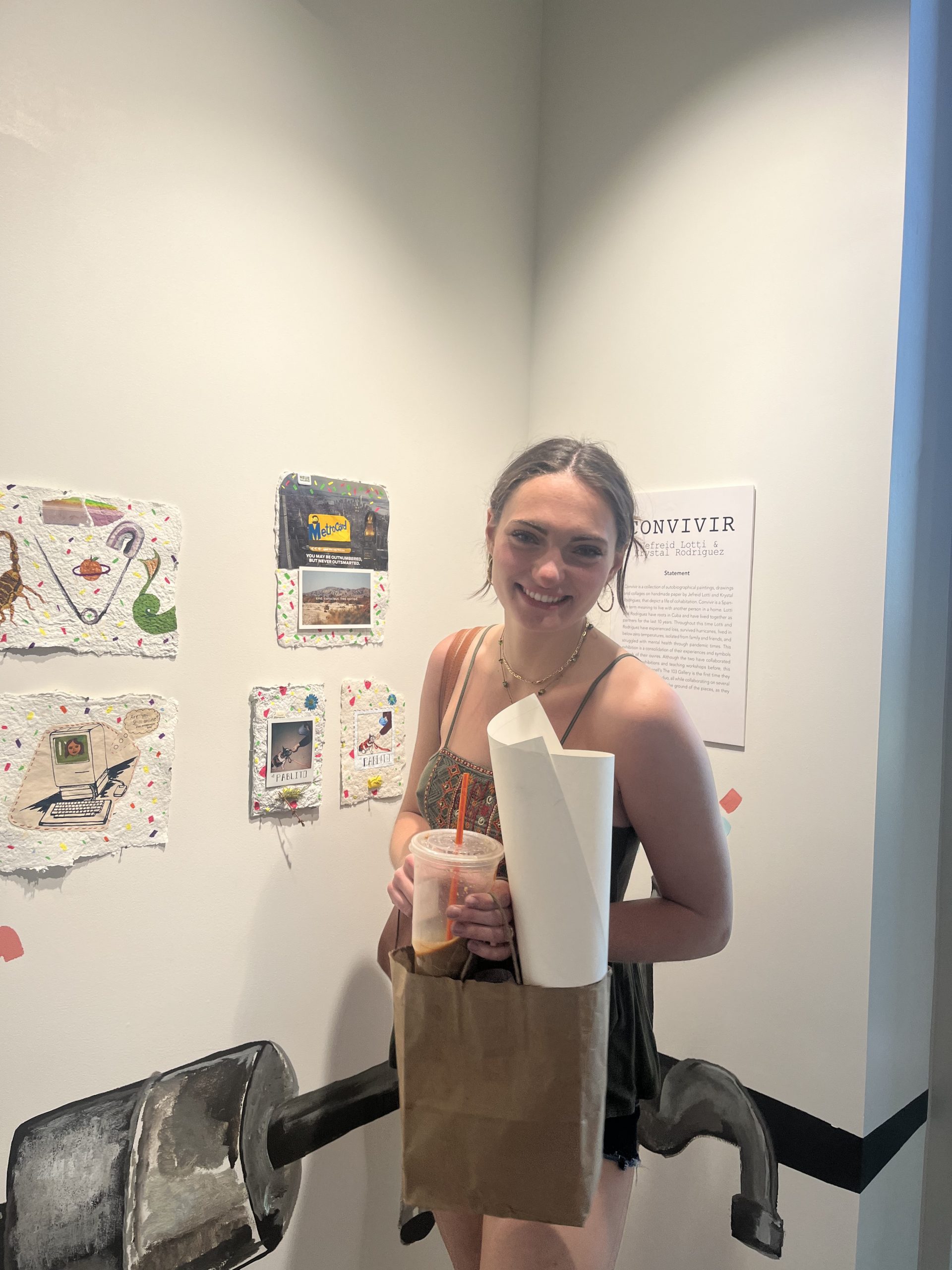
Visiting the 103 gallery, exhibit Convivir, April 13, 9:52 AM, art gallery
Proteus was a very interesting film to me, and really opened up the possibility of relating art to science. In the film, a biologist, Haeckel studies and records many small organisms known as radiolarians. These are single celled organisms that live in the ocean, which have by skeletal structures that are mesmerizingly symmetrical and beautiful. Haeckel was able to relate these beautiful creates to Biology by drawing them, which I thought was the most interesting part of his work. Art and Science sound like polar opposites, yet Haeckel was using Art to communicate scientific ideas related to our understanding of the natural world. This film did make me think differently about the relationship between art and science. Art and science are more interconnected than I previously thought, for example precision and accuracy are equally important in both. This film also highlighted how Art can be a form of communication of scientific ideas. One of the main issues in the film that I noticed was how Haeckel related God to Science. At the time, this would likely have been very controversial. For example Charle’s Darwin’s “Origin of Species” which was one of the first and most important books talking about evolution was banned in multiple places during the time. I personally now think that Christianity and Evolution can be talking about hand and hand, and that nowadays there is no problem between Christianity and these scientific theories.
The Tortoise and the Hare is a classic story with the main goal being “slow and steady wins the race.” While I can agree with this statement at times, realistically it is not always the case. In the story, a hare makes fun of a tortoise for being so slow, and they eventually decide on having a race to prove who the fastest really is. Obviously, the hare outruns the tortoise and is so far ahead decides to take a nap as it is that confident it will still win. Eventually however, the tortoise catches up while the hare is sleeping and wins the race. However, say that later on the animals of this made up world needed to spread word fast, so would by default choose the fastest animal to spread the important word. They would choose the tortoise, as everyone saw it beat the hare in the race, but this would clearly be a grave mistake. My version of this story is more realistic. In any race no one is going to just fall asleep before they finish, especially if they have their whole ego on the line. In my more realistic version of the story the hare never falls asleep and wins the race easily, showing that “slow and steady” does not always win.

I decided to base my revisionist story on the 19th Century fairytale of, “Goldilocks and the Three Bears”. I chose this story because it was one of my favorite childhood stories ever told to me. Goldilocks was a very curios young girl who was never afraid to explore and that day when she was sent by her mother into the woods she did exactly that. She walked into a house after spotting bowls of porridge through the window and she walks in and eats the one that suites her taste and even goes further as to sleep in one of the beds. She has no idea that the house she walked into belongs to three bears and only when she wakes up does she realize this and she escapes never to be seen again. As I grew up I realized that this ending was too good to be true and the chances of that happening in real life were very slim. In my story I wanted to make it more relatable to a real world event. In the real world there are consequences to any decision that one makes and in doing so we must always be conscientious of the decisions we make because they could ultimately decide whether we live or we die. In my version curiosity kills the cat and unfortunately when the bears return she is killed by the little bear after he finds her sleeping in his bed.

Immediate Response
John Baldessari’s Beach Towel puzzled me at first. When I originally saw this image I was drawn to the blue dot covering the woman’s face, seeming to be facing down at the bright orange umbrella, which then led my eyes to the green ball she is standing on. I then almost felt forced to interpret the image with my own mind. For example, I first imagined the woman as happy and having fun on the beach, but then realized she could also be concerned as it appears she is struggling to balance on whatever is underneath the green blob. I noticed the image could change depending on my judgement, as Baldessari blocked out the main aspects humans relate too.
Objective Description
Beach Towel by John Baldessari depicts a woman at the beach balancing on a green ball. The woman’s face is hidden underneath a perfectly round blue circle. Next to her is a bright orange umbrella with equally spread black and white dots covering it. Every dot have been shaded dark on the right side eventually merging into white on the left side hinting that the sun could be positioned off frame to the left. Besides the ball, umbrella and circle covering the woman’s face, the rest of the drawing is completely black and white. The woman is wearing a 1950’s style bathing suite, and the horizon, connecting the ocean and the sky, is positioned slightly below her waist.
Technical Decisions
John Balderassi first created this piece by using three-dimensional digital archival print with acrylic paint on Sintra, Dibond, and Gatorfoam panels. It was later printed onto a beach towel, hence the name Beach Towel. Balderassi uses subtraction in this piece. As mentioned previously only 3 objects in the painting have color, drawing the viewers eyes to these three objects first. Two of the colored objects seem to be crucial to any drawing or picture, the face and the ball, the object that creates the story of the drawing. This was no mistake by Balderassi however, as it forces the viewer to interpret the image however the viewer sees fit, making the viewer incorporated with the art itself.
The Work in the World
The work is meant to remind the viewer of fun times at the beach. Perhaps meant to dig into the viewers past and bring back memories from similar activities they have had to at the beach, similar to what the woman is depicted doing. Because the woman’s face is covered, leaving it up to interpretation, I found that I brought my own memories into the image. The woman could be imagined having fun, as most people, including myself, have fun memories at the beach. If one had a traumatizing memory of the beach, the woman could also be seen as concerned or scared of losing her balance.
The Story it Tells
Similar to most of his work, Balderassi is trying to draw the viewer in by allowing them to participate with the image. The brightly colored censors against the black and white background draw the viewer’s attention to them first, while also leaving the true meaning of the piece up for interpretation. When viewing images, especially of people, humans are naturally drawn to the face, as we rely on facial expressions to get by socially in our everyday life. By taking away this, the Balderassi leaves the story up to the viewer, allowing them to imagine whatever they feel fits. This is the true beauty of Beach Towel it is not a piece one can simply look at and move on, but rather a piece that forces unique thoughts, memories, and different stories.
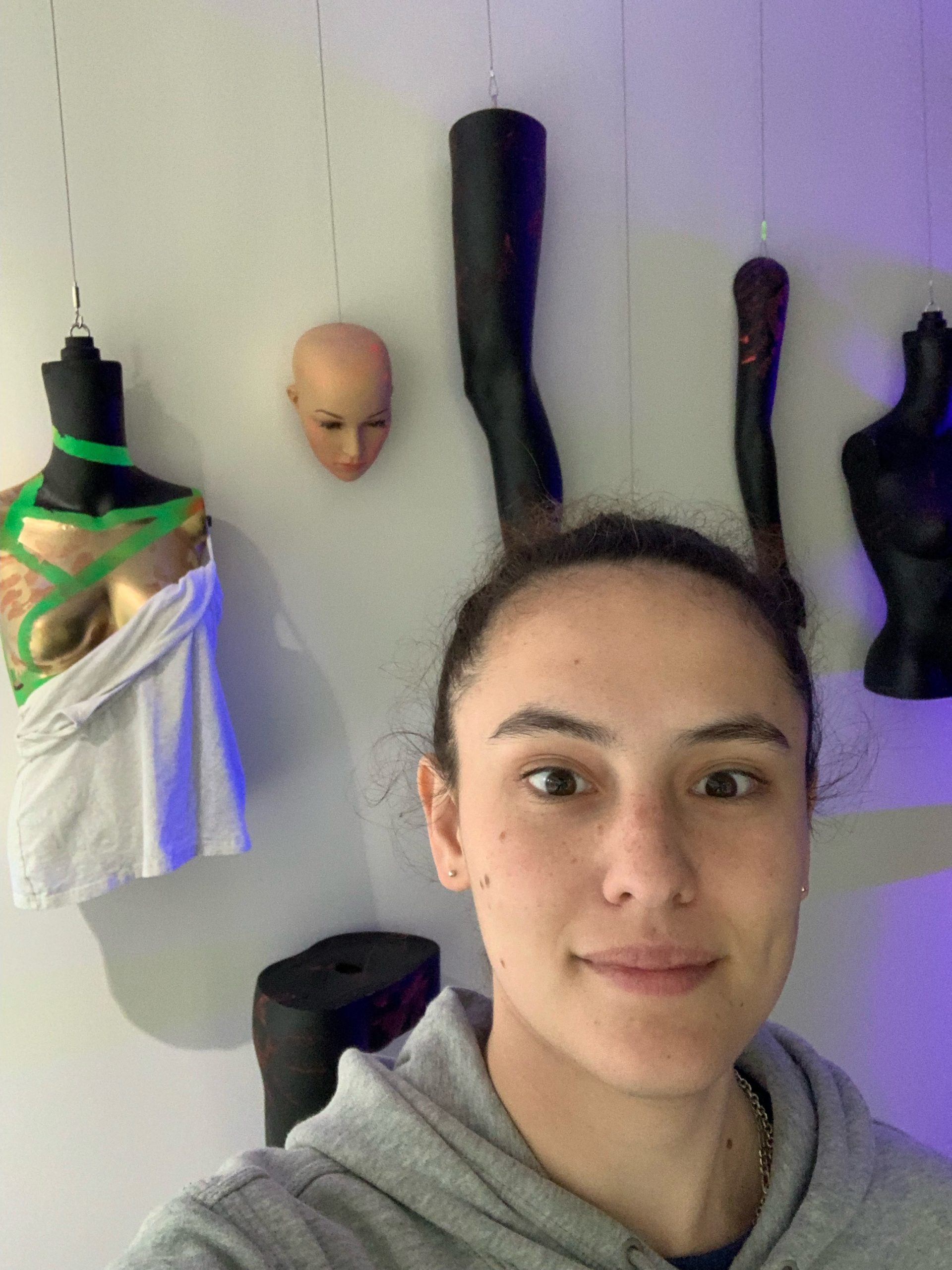
4/26/22
Title of Event: Under the Black Light
Date & Time of Event: Thursday April 26, 2022
Location of Event: Holmes
Type of event: Exhibit
Title of Event: Photography and Video Art in the Internet Age
Date & Time of Event: Wednesday March 2nd 2:30 pm
Location of Event: Samek Art Gallery
Type of event: Exhibition


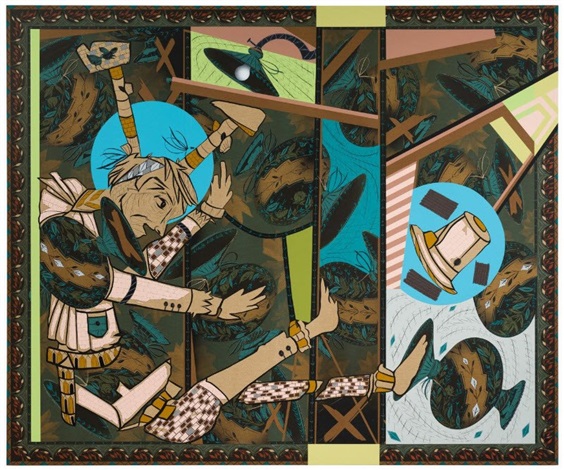
The first idea that comes to mind for a number of Pittman’s drawings, especially the one above, is “Ancient Egypt.” A combination of irregular body positioning, foreign or alien looking objects, and the coloring is what pushes this initial thought into my mind. As I search deeper into the paintings contents, objects like the lamp in the top middle deter me from the thought, but nonetheless, it persists as I continue looking. The title of the painting, “found buried #4,” is a reassuring component as well for obvious reasons. Regardless, the piece makes me feel uneasy as I am not completely aware of the artist’s intentions.
Imagine a strange looking human falling through an abyss–arms and legs flailing. The abyss is broken into four parts, all of which are more or less identical with brown and a dark forest green background. Scattered across the abyss are vases with a very similar color scheme. The man is dressed in a beige garment with gold cuffs around his ankles and two axe looking objects stemming from his head. If you are confused, welcome to the club. The piece in fringed by brown and black half circles.
This is a very dynamic composition with many components at hand. One viewing the piece is unable to stand back and view it like a landscape, instead needing to move around and focus on the different aspects. Pittman achieves this dynamic nature using repetition–with the same object scattered across many times. Pittman’s intricately constructed paintings transform pattern and signage into opulent sceneries full of complexity, contrast, and yearning. Pittman conveys themes of romantic love, violence, and mortality through anthropomorphic depictions of furniture, weaponry, and animals that are rich in symbolism.
There are two objects in the piece that draw particular attention–an axe and a number of vases. While the vases appear to be intact and unbroken, one can feel a sense of unease knowing the problems that might arise when one comes into contact with the other. Exquisite decor and weapons of destruction; a bull in a china shop. Pittman’s work often connects to his Colombian roots. It is possible this piece connects to a similar theme, how culture has historically been corrupted at the hands of others. With so many elements, it is very difficult to pinpoint the pieces intention, but nonetheless remarkable the thoughts that stem from its viewing.
Pittman’s works shows how beauty and sorrow, pain and pleasure, are complementary, and they draw the viewer’s attention to bittersweet experiences and the value of emotion in art. In the painting presented, we see the contradicting points of viewership, pretty and warm colors juxtaposed by falling and confused man. Pittman’s use of concurrently happening tales and lavish imagery represents the rich multiplicity of American society, the artist’s Colombian origin, and the distorting effects of hyper-capitalism on everyday life, despite subject matter that varies from series to series.